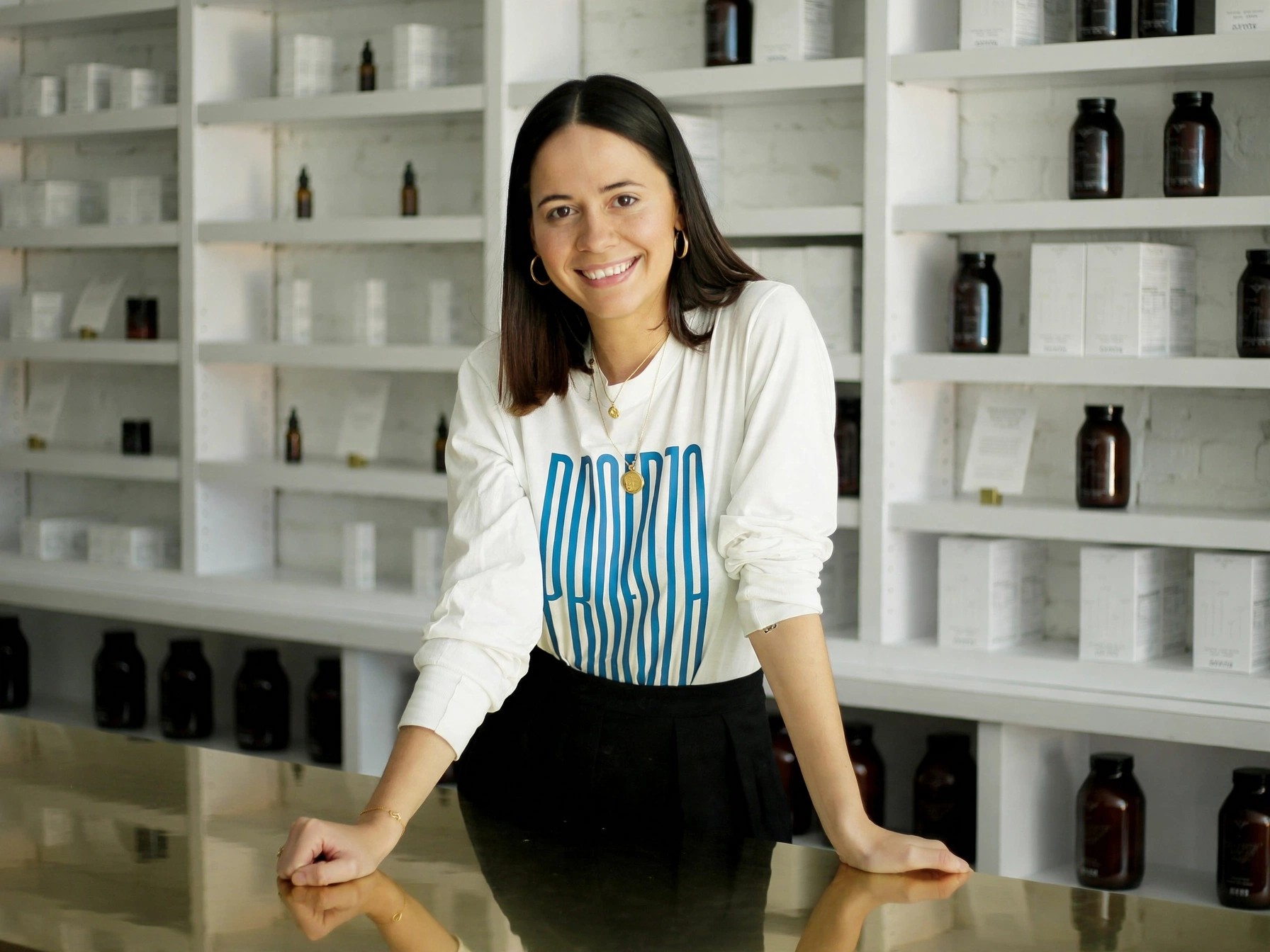
Morning light in a one bedroom in Brooklyn, two twenty three year olds mixing turmeric powder by hand and packing pouches on the kitchen counter, hoping the month brings in enough to cover rent. That is where Golde begins. From that counter came a turmeric latte blend, then a small shelf of blends and teas, now made in larger lots with a formulator and sold across the country.
Trinity Mouzon Wofford and her partner Issey Kobori started Golde in 2017, at age 23, while both worked full time jobs. They designed the labels in house, mixed the first batches themselves and set a modest goal of two thousand dollars a month. The brand now operates from upstate New York with a small team of nine by its fifth year.
Wofford grew up in upstate New York with what she calls crunchy granola wellness, then studied pre med at NYU. Her mother lives with severe rheumatoid arthritis and once saw a holistic doctor Wofford admired, then had to stop because the visits cost too much. That detail sits at the center of Golde. The promise is cafe style lattes and pantry friendly blends that are easy, approachable and fun, priced so most hero products land around a dollar a day per serving.
What Seed to Capsule noticed is how much of the chain Wofford chose to keep simple on purpose. Brainstorm in house, test in the kitchen, then work with a professional formulator for safety and taste. Use high quality sourced ingredients and stock packaging to hold the price near thirty five dollars or less. It is a provenance story built less on a single farm than on decisions about sourcing, formulation and price, and on a founder who can say what she knows and what she is still learning.
In 2016 you said you felt caught between the crunchy granola wellness you grew up with in upstate New York and a luxe prestige version that felt out of reach, and in 2017 you launched with one product from a Brooklyn apartment. What did that gap look like day to day?
It was inspired by my own experiences as a consumer in wellness and feeling caught between the crunchy granola stuff that I had grown up with in upstate New York and this next wave of offerings that felt so luxe and prestigious that it was out of reach for me. I was a pre med student at NYU, I shopped at co ops when I could, and I also saw these beautiful brands I could not afford. When I started my business, I didn’t know anything. There’s something special about just throwing things at the wall and seeing what sticks. Issey and I were high school sweethearts, we were 23, we worked full time, and we came home to mix and pack. We wanted to bring our own voice to the space and be really colorful and warm and inviting. We just kind of went for it and took no money out of the business, and just were hoping to get it to the point that it could pay our rent.
You mixed those first batches of Original Turmeric Latte Blend by hand with Issey Kobori and aimed for two thousand dollars a month. What did hand mixing teach you about powder, and when did you know you needed outside help?
Hand mixing taught us the basics. Turmeric stains everything, spices clump if there is any moisture, and taste changes with every small shift in ratio. We did it on our counter, scooping and sealing, learning how powder settles and how a label has to stay readable in a steamy kitchen. It always comes back to the customer: where they are in their routine and what they need. And how can we meet them where they are. That meant the blend had to stir into hot milk or water without a long routine. We needed help when orders grew past what two people could pack at night. We still brainstorm concepts in house and test in what we call kitchen magic, then we work with a professional formulator for efficacy, safety and deliciousness. That step gave us consistent fill weight, better flow and a repeatable process, lot after lot.

Your mother saw a holistic doctor for severe rheumatoid arthritis and then had to stop because she could not afford it. How does that history shape the way you set prices around one dollar a day?
My mother has severe rheumatoid arthritis and she improved seeing a holistic doctor I wanted to emulate when I was pre med. Then she had to stop going because she could not afford it. That stayed with me. It ought to be for everyone. It needs to be more accessible, more inclusive, and it needs to feel good. Most of our hero products are around one dollar a day per serving. We would rather formulate around a price point of thirty five dollars or less than charge luxury prices. We use high quality sourced ingredients and we save where the customer does not taste it, like stock packaging, to keep prices down. I wanted to make something for everybody. That does not mean cheap. It means careful. Every cent has a job, in the ingredient or in the testing or in the pack that keeps powder dry.
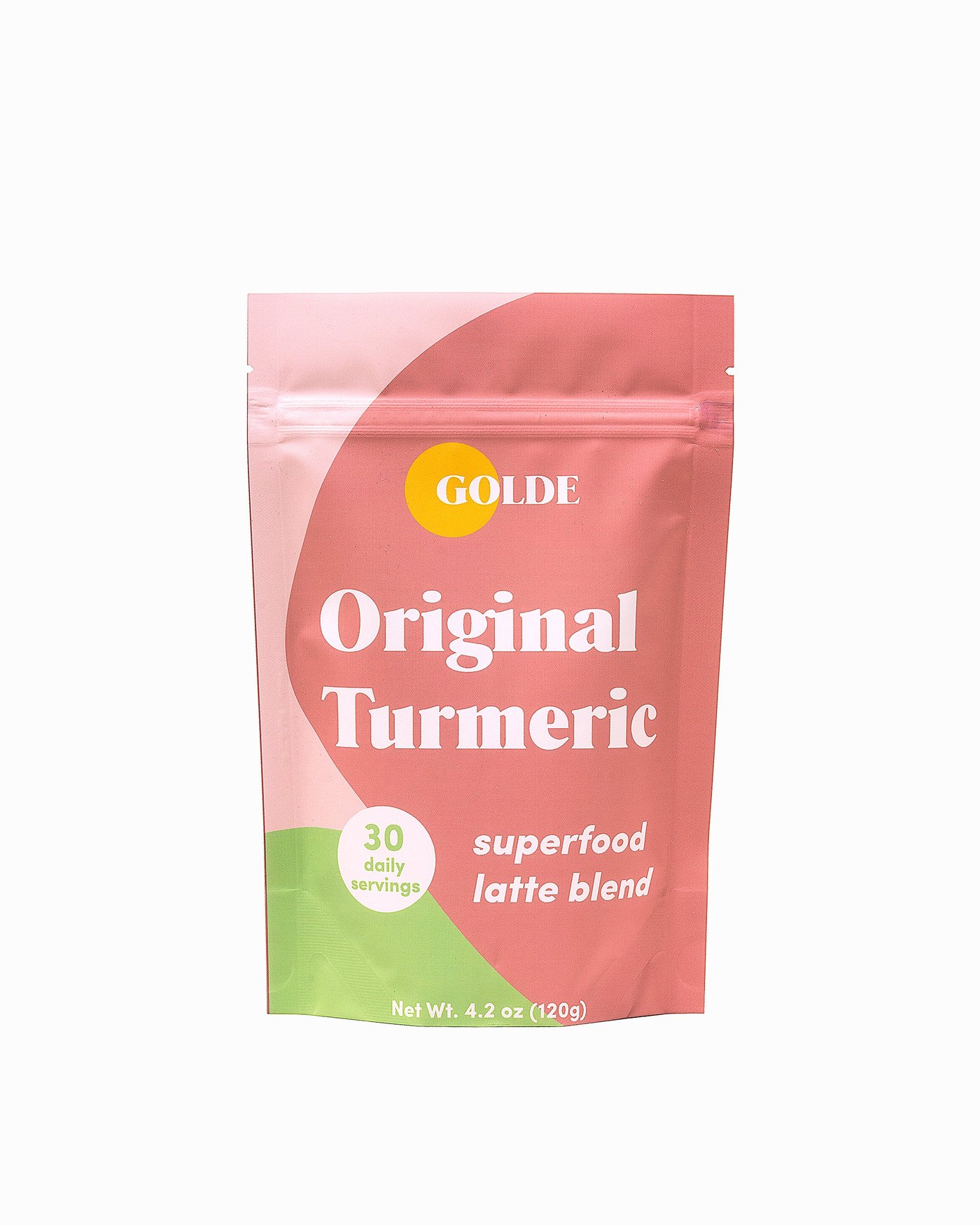
The label for Original Turmeric Latte Blend lists six essential superfoods in a warming spiced latte, sold for thirty two dollars. Can you walk that pouch backwards to where its ingredients start?
I can walk you through how we think about it. We start with a concept in house, turmeric plus warming spices that make a caffeine free latte with hot milk or water. Then we source each component through suppliers who provide specifications and paperwork. Turmeric root is dried and milled to powder, spices are milled and blended, and the blend is made to a set formula so each batch tastes the same. The finished powder is packed, sealed and coded by lot so we can trace it. What the label shows is the Supplement Facts panel logic applied to a food blend: what is inside, in what order, and how to prepare it. Where I am careful is origin. We can name our suppliers and show documents, but we do not own the farms. Harvest place and year can change with supply. So I will credit what is traceable and name what is not yet, and tell you what it would take to show more.
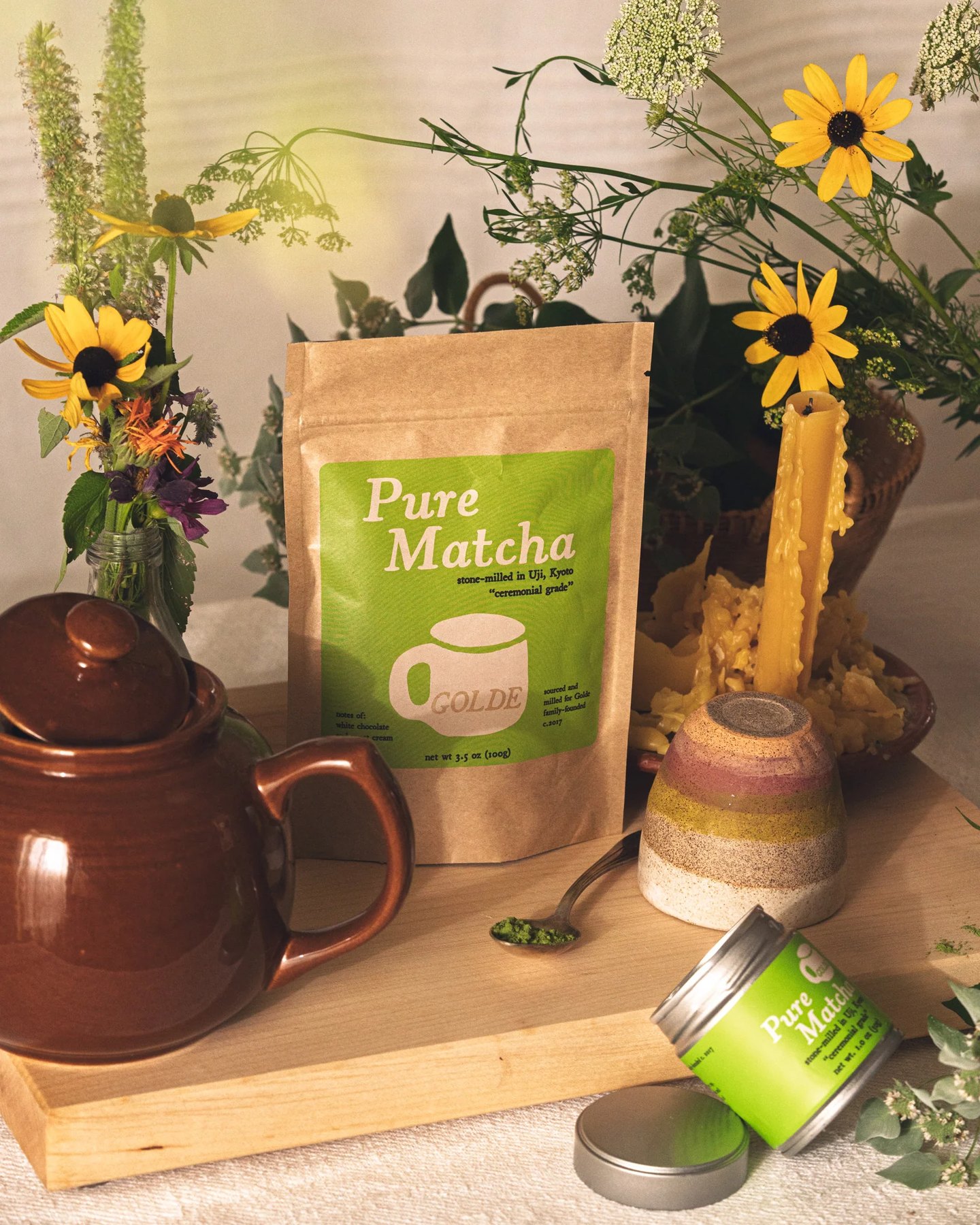
Pure Matcha is your bestseller, described as one hundred percent pure shade grown matcha, sold in a thirty gram tin for thirty nine dollars. What does shade grown mean here, and how does that leaf become the powder in the tin?
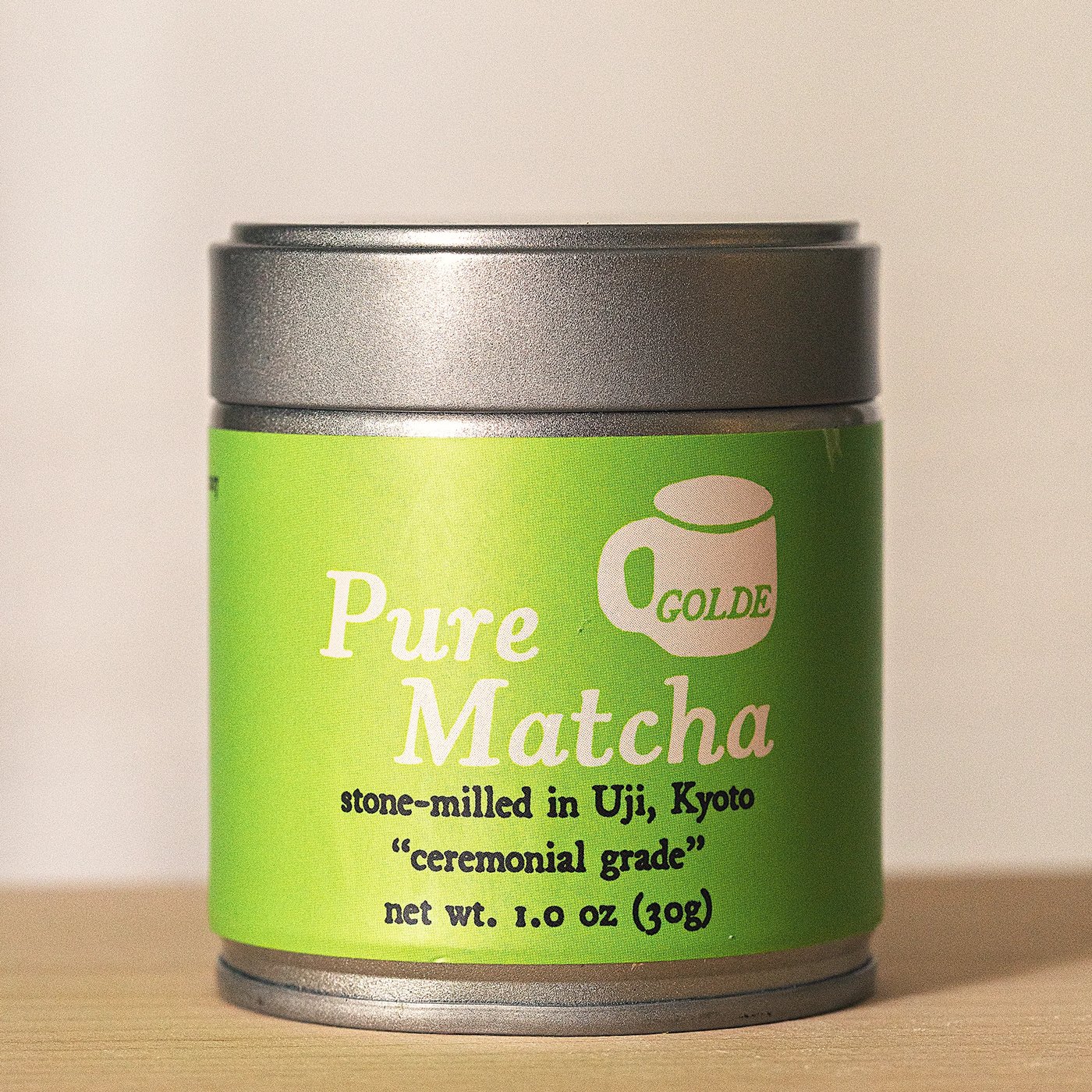
Pure Matcha is one hundred percent pure shade grown matcha. Shade grown means tea plants are covered for weeks before harvest, which shapes color and flavor, then leaves are picked, steamed, dried and stone milled to a fine powder. That is why preparation matters. You whisk it with water or steamed milk for a latte, iced around nine in the morning or in the afternoon. It contains caffeine, so dose and timing matter. Our tin is thirty grams, the pouch is one hundred grams, and we sell a three pack of tins. As a buyer, look at the other ingredients line. Ours shows matcha and nothing else. Then look at the lot code and ask for the certificate of analysis for that lot. That document should show what tests were run and by which lab. That is how you move past words on the front and into what the label proves.
We are talking about boosting the routine that you already have, not trying to get someone to suddenly have 50 different powders that they cannot even pronounce in their cabinets.
Trinity Mouzon Wofford
You say you test in the kitchen then work with a professional formulator. What happens in that handoff, and what tests do you ask for before a blend is approved?
We bring the idea and the flavor we want. The formulator brings food science. They check ratios, solubility in hot milk and water, stability over shelf life, and whether the taste holds from first scoop to last. Then we lock a specification: ingredient identities, extract ratios where relevant, particle size for mouthfeel, moisture limits, fill weight. Every production lot gets a certificate of analysis from the maker, and we use third party lab testing to verify identity and to screen for heavy metals and microbes. Heavy metals matter because plants take up minerals from soil, and matcha and turmeric are both soil grown. Encapsulation is not our format, we sell powders and teas, but the same discipline applies: confirm what came in, confirm what went out, keep the paper by lot. If a result is out of spec, the lot does not ship. That is the document behind the claim.
Cacao Turmeric Latte Blend pairs cacao with turmeric for thirty two dollars and Bon Appetit called it a favorite coffee alternative. Why pair those two, and what should a careful buyer read on that label?
We paired calming cacao with warming turmeric because people already had a mug habit and we wanted to meet it. Stir it into hot milk or into coffee if you keep coffee. It is a spiced cacao instant latte, not too bitter, not too sweet. We are talking about boosting the routine that you already have, not trying to get someone to suddenly have 50 different powders that they cannot even pronounce in their cabinets. Read it like we do. Front copy tells you the idea. The back tells you the facts. Look for full ingredient names, the serving size and servings per container, and the other ingredients line. Note whether flavors or sweeteners are added and in what amount. Then check the lot code and ask what testing covers for that lot. I like simple labels because my customer shops for a household and keeps a small shelf for years. She wants to know if the expensive version was worth it, and the label plus the lot paper should answer that.
Golde moved from Brooklyn to upstate New York in the Hudson Valley, known for farms and co ops, and your visuals show a home kitchen with matcha, a cookbook and a garden nearby. What is actually made or grown there, and what is not?
Upstate is home now. It is where I grew up, and the Hudson Valley has farms and co ops I know well. Our visuals are honest about that life. A founder led home kitchen, whisking matcha or a turmeric latte, cookbook and garden nearby. What is made there is ideas and daily use. We brainstorm, we cook, we test pours and whisks, we photograph in daylight. What is not there is large scale manufacturing. Powders are milled, blended and packed in food facilities that can control moisture, sift, check fill weight and hold lot records. The garden grows food we eat. It does not supply the product line. I say that plainly because provenance means saying where a step happens and where it does not. If we ever contracted an acre or a harvest, we would name the grower, the harvest date and the lot it went into.
In 2019 you launched at Sephora as the youngest Black woman to launch a brand there, in 2021 you entered Target in hundreds of locations, and in June 2020 sales passed all of 2019 after support for Black owned brands. What did retail scale change about sourcing and paperwork?
Retail scale changed volume and discipline. Sephora in 2019 put us in front of a national customer. Target in 2021 put us in hundreds of locations. June 2020 was a surge we did not plan, after our donation effort for the NAACP Legal Defense Fund and support for Black owned brands, when June sales exceeded the entire prior year. Larger purchase orders meant larger ingredient lots, more certificates of analysis to review, tighter specs on taste and color, and more attention to stock packaging lead times. It was my duty to share insights from my story as I was figuring out how to build and scale Golde. We stayed a small but mighty team, nine by our fifth anniversary. That size forces clarity. Fewer formulas, done well, with papers filed by lot. We celebrated that fifth anniversary in March 2022 with a Super Greens duo with Diaspora Co for Women’s History Month, which is a good example of scaling by partnership rather than by adding fifty powders.
You have said you were always clear you did not want to write the Golde cookbook, then you wrote Eating at Home. What changed, and how does the book connect to the blends?
I was always very clear from the beginning that I didn’t want to write the Golde cookbook. I did not want a book that just told you to add powder to everything. Then home cooking during those early years taught me something else. Good quality, simple food is health food, and the ingredients you cook with are as important as the gentleness you bring to the process. Eating at Home, thirty three dollars, is about that table: simple meals, small rituals, lunch breaks taken. The blends fit inside that life. A morning matcha whisked with water or steamed milk. A turmeric latte stirred with hot milk at night. Kyoto Hojicha, our toasted green tea powder that tastes chocolatey and is naturally low in caffeine, for late afternoons in winter. Shroom Shield, creamy cocoa with functional mushrooms, is in the same pantry. Sip your ritual is not a slogan to me. It is how a household actually uses a tin until it is empty, then buys it again.
Closing note from the desk
What stays with us is the price sheet as a form of care. Wofford learned early that a helpful visit can end when money runs out, so she built Golde to stay near a dollar a day and under thirty five dollars, with stock packs and few formulas. The paper trail matters more than adjectives here, lot codes and lab results over front label promises.
Golde set out to make wellness easy, approachable and fun, and to make it for everybody. Traced back, that means a Brooklyn counter, a formulator bench, soil grown crops dried and milled to powder, and a kitchen table in upstate New York where the product is actually used.
Product spotlight
Pure Matcha is the signature bestseller, thirty nine dollars for a thirty gram tin, also in a one hundred gram pouch for sixty four dollars. It is one hundred percent shade grown matcha powder, whisked with water or steamed milk for hot or iced lattes. Use a small daily serving in the morning or afternoon, mindful of caffeine, and store sealed and dry.
Original Turmeric Latte Blend is the first product from 2017, thirty two dollars, built from six essential superfoods into a warming spiced latte. The label positions it around skin glow, gut health and immunity as a brand statement, not a promise of effect. Stir or whisk with hot milk or water for a caffeine free mug, and keep the pouch sealed by lot code.

Dana Kessler
Dana runs the news desk and the sourcing guides at Seed to Capsule. She files every certificate of analysis a brand sends her by lot number, and keeps a second list of the ones that never arrived.
More from Dana Kessler →