Twenty grams of protein in eighty five calories sounds simple until you ask what animal it came from and what else is in the scoop. Brett Ender and Harry Gray built Noble Origins to answer that plainly, with beef, collagen, colostrum and organs in one powder. We follow the formula back to pasture, process and test.
Twenty grams of protein per scoop is the number Noble Origins prints front and center. It is a small number with a long chain behind it.
Brett Ender and Harry Gray came to supplements as hosts of The Meat Mafia Podcast, talking to farmers, doctors and founders about food that comes from animals raised well. Two years after founding Noble Origins they recorded a behind the scenes conversation about building the company from the ground up, still speaking in the same language of service and simple food.
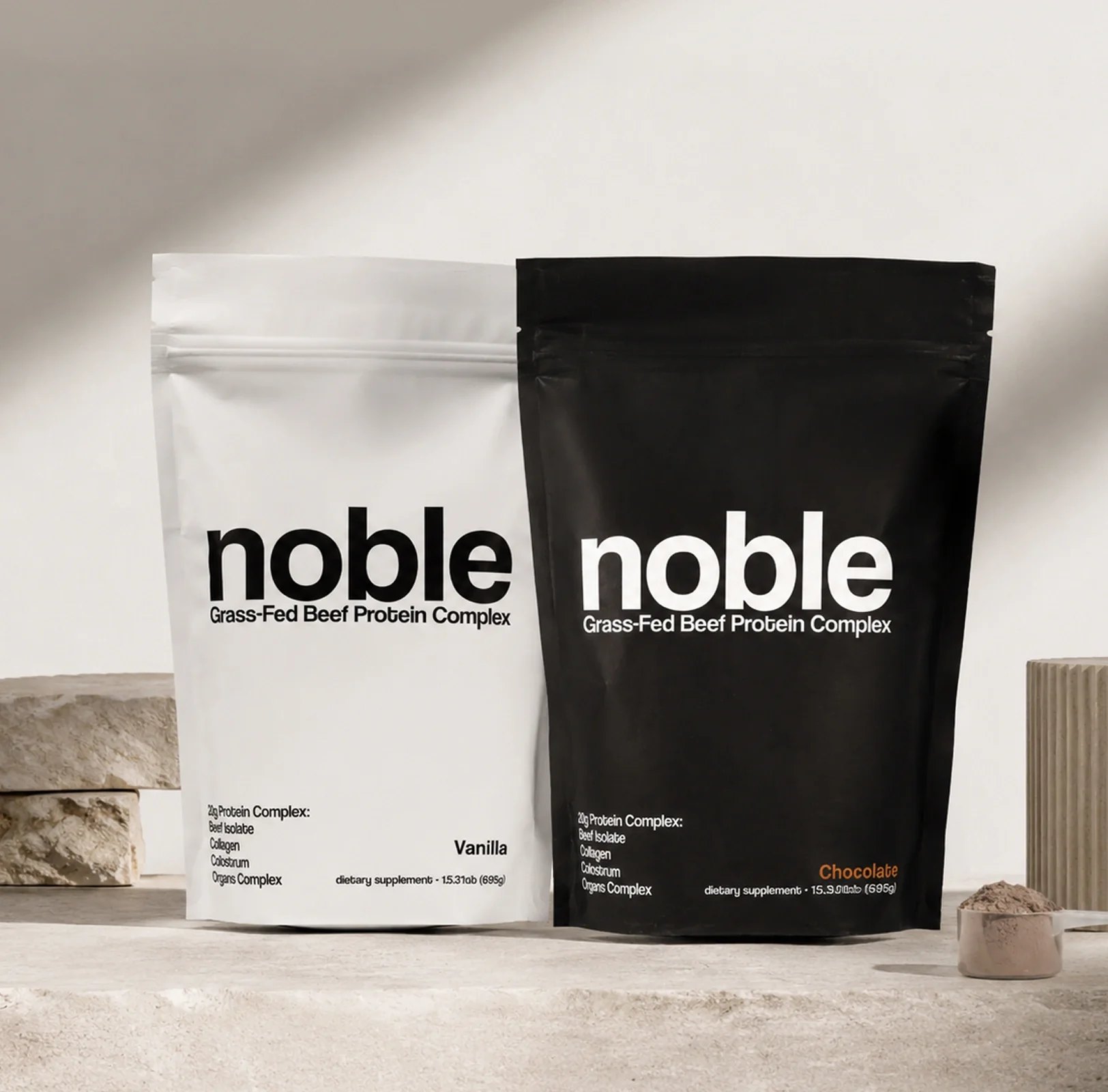
What they sell now is a nose to tail powder built around 100 percent grass fed beef protein isolate, hydrolyzed collagen peptides, grass fed bovine colostrum and an organ blend, flavored in vanilla and chocolate and sweetened with stevia. What we noticed, reading the label closely, is what they refuse. No whey as a protein base, no fillers, no artificial ingredients. The question for this magazine is whether the origin story holds past the label, lot by lot, ingredient by ingredient.
You describe Noble Origins as daily fuel made from real food, built with ingredients that earn their place. Your site says the beef protein isolate and nose to tail blend are derived from 100 percent grass fed cattle raised on regenerative farms. What does that phrase mean in your supply chain, and which farms are we talking about.
We started Noble Origins because we wanted daily fuel made from real food. That phrase guides every decision. Every ingredient earns its place. Nothing extra, nothing wasted. We take our values seriously. That means no compromise.
When we say 100 percent grass fed cattle raised on regenerative farms, we mean cattle that eat grass for the whole life of the animal. We use 100 percent beef protein isolate as our primary protein source. That isolate starts as real beef. The protein is separated out and excess fat, cholesterol and non protein components are removed. Then we add hydrolyzed collagen peptides, grass fed bovine colostrum and an organ blend because those are the nutrient dense parts of the cow that most powders leave out.
We do not name a single ranch on the label today. Our beef comes through suppliers who aggregate from grass fed herds managed with regenerative practices. I know that is not the full traceability our customer wants. What it would take to show it is farm names, harvest dates and lot level paperwork tied to each run. We are working toward more of that proof.
Your mission page says Noble Origins was created as a different kind of fuel in an industry built on cheap fillers, hidden irritants and artificial ingredients. You were podcasters first. What moment made you decide to make a powder yourselves instead of recommending someone elses.
In an industry of shortcuts, we choose service. We had talked to a lot of founders and farmers on the show. We kept hearing the same gap. People wanted protein without the shortcuts, something they could use every day that did not rely on whey or on artificial flavors and sweeteners.
What you eat should honor your body, not harm it. That belief kept coming up. We wanted a clean and simple protein powder with all of the nutrient dense parts of the cow included. Our formulas are designed to fuel your body’s potential with real food. Noble fits seamlessly into your lifestyle to fuel your body and your potential.
So we built it. At Noble, we believe in fueling your body the way nature intended. That meant beef protein, collagen, colostrum and organs in one scoop. No whey. No fillers. No artificial ingredients. Ever. No fillers. No junk. Just good, Noble fuel.

The label lists four animal parts in one scoop, beef protein isolate, hydrolyzed collagen peptides, bovine colostrum and an organ blend. Most buyers have only bought whey before. Walk us through each part in the order it enters the plant, and what form it arrives in.
The order matters because each part has a different starting point. Beef protein isolate arrives as a dried, isolated protein made from beef. It is our primary protein source and it carries the 20 grams of protein per serving on the Supplement Facts panel. Each serving also shows 85 calories on the label we publish today.
Hydrolyzed collagen peptides arrive as a dried peptide powder. Hydrolyzed means the collagen has been broken into shorter chains so it mixes more easily. Then grass fed bovine colostrum arrives as a dried powder. Colostrum is the early milk collected after calving, dried carefully to keep it stable. Then the organ blend arrives as dried organ powders that are milled and blended to a set ratio.
All of those powders meet at encapsulation, or in this case at powder blending and fill. Fill weight per scoop is set so one scoop per day delivers 20 grams of protein. The vanilla and chocolate versions share that base. What changes is the natural flavor system and cocoa in chocolate.
The label shows 20 grams of protein and 85 calories per serving, with subscription plans described as 20 grams, 40 grams or 60 grams of protein per day. That math reflects one, two or three scoops. How did you set that serving, and what does the other ingredients line show.
We set one scoop per day for 20 grams of protein because that is a clear daily fuel amount. It is easy to track. If a household uses two scoops, the label math points to 40 grams. Three scoops points to 60 grams. That structure lets a partner or a parent share the same tub without guessing.
The Supplement Facts panel lists protein, calories and the added nose to tail blend. The other ingredients line shows the natural flavors and stevia we use to sweeten. We do not use whey as the protein, we do not use fillers and we do not use artificial ingredients. That is the promise on the front of the site and it has to match the back of the tub.
One detail to read carefully. Grass fed bovine colostrum naturally contains trace amounts of whey, casein and lactose. That is the nature of colostrum as a dairy derived ingredient. So when we say no whey, we mean no added whey protein. Anyone who avoids all milk proteins should read that line and decide with care.
Every ingredient earns its place. Nothing extra, nothing wasted.
Brett Ender and Harry Gray
You state the powder is independently tested for 178 banned substances. For a careful buyer, what does that test cover, who holds the certificate of analysis, and what does it not prove about heavy metals or farm origin.
Testing was important from the start because protein powders carry trust. We state the finished powder is independently tested for 178 banned substances. That kind of screen is a list based check run by a third party lab. The lab tests the sample against a set list and reports pass or fail per compound.
A certificate of analysis is the document for a specific lot or batch. It shows what was tested, the method, the limits and the result. We hold those records by lot, and the third party lab holds its own copy. If a customer asks about a tub in hand, the lot code on the bottom is the key that links the tub to its paperwork.
What that screen does not prove on its own is farm origin. It does not map back to pasture. Heavy metals are a separate test with separate limits, reported in parts per million. Anyone reading a certificate should look for the lot number, the test date, the lab name and whether heavy metals and microbes were run in addition to the banned substance screen.
The site describes the cattle as grass fed and the land as regenerative, yet no ranch name, harvest date or extract ratio appears on the label. What is traceable today, what is still opaque, and what would it take to name the grower.
What is traceable today is the formula and the finished lot testing. We can point to the input specs for 100 percent grass fed beef protein isolate, hydrolyzed collagen peptides, grass fed bovine colostrum and the organ blend. We can point to the blending and fill records and to the third party results tied to lot codes.
What is still opaque is the field level chain. We do not publish the ranch names, the harvest windows or the slaughter and drying sites per lot. Beef protein isolate and collagen are processed ingredients. They pass through more hands than a whole cut. Without farm level lots carried through drying and milling, we cannot name the grower on pack with confidence.
What it would take is chain of custody paperwork from ranch to dryer to blender, with lot numbers that stay attached. That means contracts that require origin lots on each inbound certificate of analysis, plus batch records that link inbound lots to each finished lot. That is patient work, but it is the only way to say where exactly this comes from, and how do you know.
Colostrum and organ powders are sensitive to heat and time. How are they dried and handled before blending, and how do you check that a shipment matches spec when it arrives.
Colostrum starts as liquid and must be dried gently, then kept dry and cool. Organ meats start as fresh tissue and must be handled quickly, dried, then milled to powder. Time and temperature matter at each handoff, from collection to dryer to storage to blender. If a shipment sits warm or damp, quality slips before it ever reaches the tub.
When a shipment arrives, we check it against spec. That means confirming identity, appearance and odor, moisture, and that the certificate of analysis matches the lot code on the bags. Fill weight and blend uniformity are checked at the powder blender. If a lot does not match, it does not go into the finished batch. That discipline is part of what we mean by service over shortcuts.
Stevia and natural flavors are doing a lot of work in a beef based powder. Why those choices, and what should a label reader who dislikes the taste of organs expect from vanilla and chocolate.
Beef and organs have a savory note. Vanilla and chocolate have to cover without artificial flavors. We use natural flavors and stevia to sweeten. That keeps the promise of no artificial ingredients while keeping the powder easy to mix for daily use.
A label reader should expect a mild cocoa or vanilla cup, not a plain beef broth taste. One scoop mixes with water or milk and the collagen helps it suspend. Some palates still notice the base, especially in water. That is the tradeoff of real food ingredients in a sweet format. We would rather state the base plainly than hide it behind a heavy flavor system.
Two years after founding you sat down for a raw behind the scenes conversation on building Noble Origins from the ground up. Looking back, what broke, what did you change in sourcing or testing, and what remains unfinished.
What broke early was the simple plan. We thought good inputs would be easy to line up in steady volume. They were not. Grass fed beef protein and colostrum move in seasons. Organ supply moves with harvest schedules. Lead times stretched. We had to learn to plan further ahead and to qualify backup suppliers without lowering the spec.
What we changed was paperwork discipline. Every ingredient earns its place, but now every lot has to earn it too, with matching certificates and clear batch links. We tightened inbound checks and finished testing, including the independent screen for 178 banned substances. That made daily work slower and more exact.
What remains unfinished is field proof. We can show what is in the scoop and what the lab found. We cannot yet show every pasture behind every tub. To live noble, in our words, is to reclaim health, live purpose and nourish with nature’s perfect protein. The next step is to attach names and places to that promise, lot by lot.
Closing note from the desk
What stays after this conversation is the clarity of the refusal. No added whey, no fillers, no artificial ingredients is easy to print and hard to hold across seasons, suppliers and flavor runs. Ender and Gray return to service and intention often, and the formula reflects that spare approach.
Noble Origins set out to make daily fuel from real food, with beef, collagen, colostrum and organs in one scoop. The finished testing and lot paperwork are traceable. The pasture behind the powder is not yet named. We record both plainly, and we will look for farm names, harvest dates and inbound certificates on the next labels.
Product spotlight
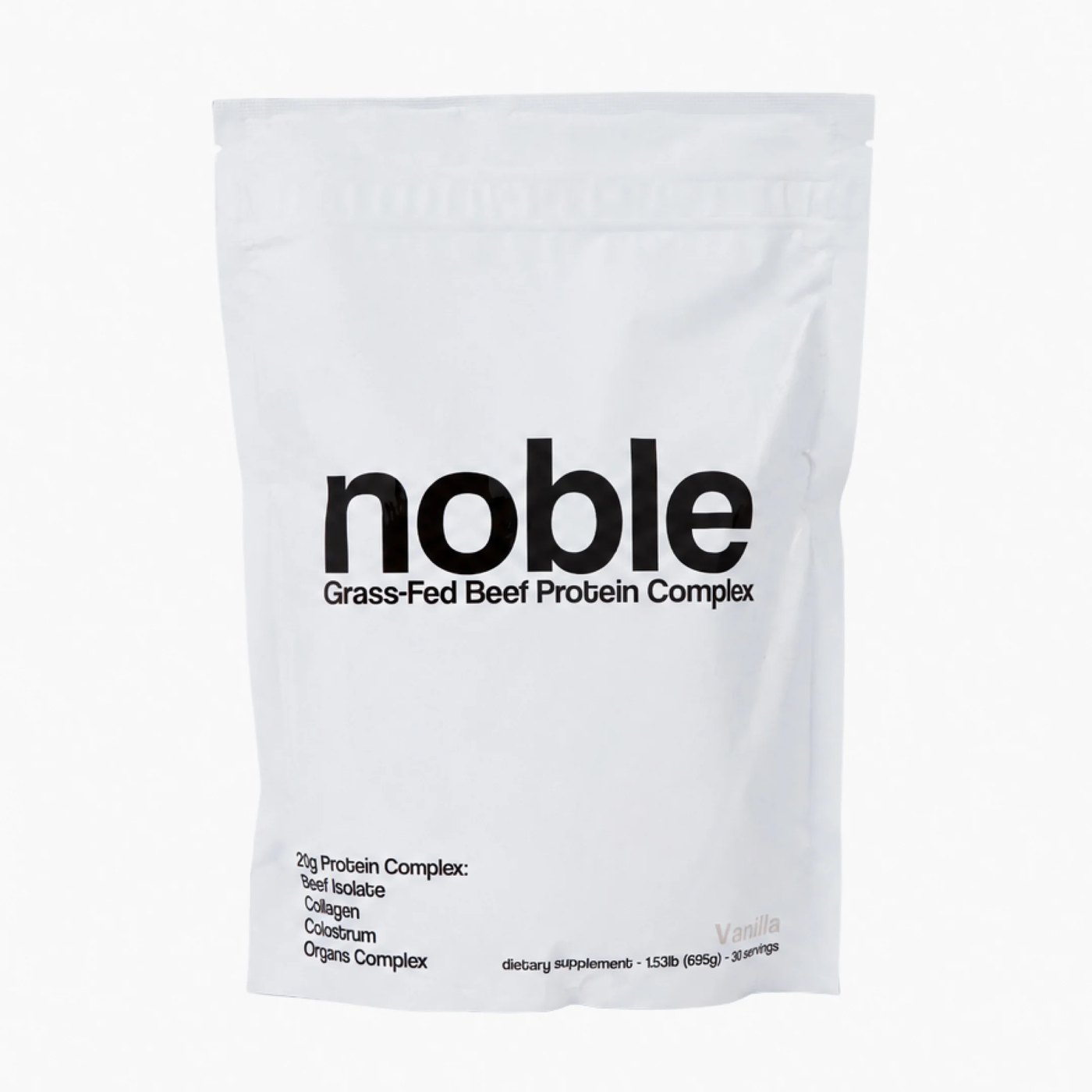
Noble All-in-One Protein Vanilla, 79 dollars for 30 servings in the 30 serving tub, with 60 servings listed at 158 dollars, 90 servings at 237 dollars and 180 servings at 474 dollars. A beef protein and collagen base with colostrum and organs, vanilla flavored and sweetened with stevia. Use one scoop per day for 20 grams of protein, mixed with water or milk.
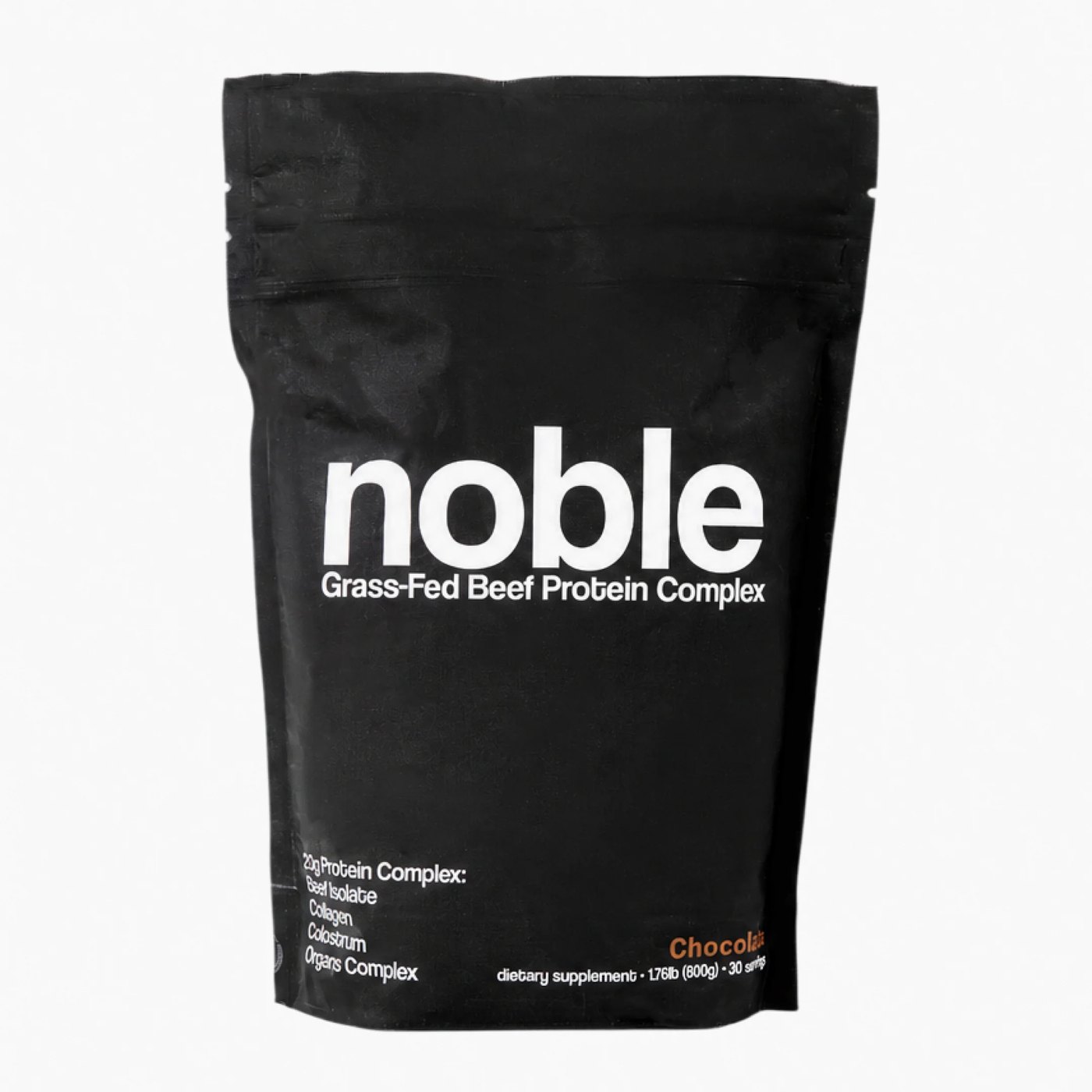
Noble All-in-One Protein Chocolate, 79 dollars for 30 servings in the 30 serving tub, with 60 servings listed at 158 dollars, 90 servings at 237 dollars and 180 servings at 474 dollars. The same nose to tail base with cocoa and natural chocolate flavor, sweetened with stevia. Use one scoop per day for 20 grams of protein, shaken well and used as part of a steady daily routine.

Dana Kessler
Dana runs the news desk and the sourcing guides at Seed to Capsule. She files every certificate of analysis a brand sends her by lot number, and keeps a second list of the ones that never arrived.
More from Dana Kessler →