A lower caffeine coffee built from shade grown arabica and six mushrooms, tested for heavy metals and mycotoxins, and packed as instant powder for a daily ritual. Andrée Werner and Rashad Hossain explain where each part comes from and what the label can prove.
Boston in March 2020 was cold, quiet and uncertain. That is where Andrée Werner and Rashad Hossain launched RYZE, a direct to consumer coffee company run by what they call a small but mighty crew of creatives, strategists, scientists and customer staff in Boston, Massachusetts.
The idea started earlier, at Harvard, where the two best friends relied on coffee through long days and late nights. The spikes and crashes left them depleted, anxious and unsettled. Hossain then spent three years after college at Kraft Heinz in marketing for prominent coffee brands, and grew wary of selling coffee that did not support a steadier way to live.
What they make now is instant mushroom coffee. Shade grown organic arabica from Mexico is roasted, brewed and spray dried, then blended with six certified organic mushrooms grown in California and Nevada, plus MCT and fiber. The brief names Cordyceps, lion’s mane, reishi, turkey tail, shiitake and king trumpet. Each lot is tested for mycotoxins and heavy metals.
What we noticed, and what this conversation follows, is how much of the chain they can name. Farm states for mushrooms, country for coffee, a spray drying step, a blending step, a testing step, shipment from Texas. We ask what is documented, what an extract ratio or a certificate of analysis would show, and where the record is still thin.
You launched online in March 2020 as two Harvard undergrad friends who had lived on coffee through long days and late nights. What did those spikes and crashes feel like, and what made you say you needed better so you made it.
Hi, we are Andrée and Rashad, and we are so happy you are here. We did not set out to build a company, we just wanted to feel better. At Harvard we relied heavily on coffee to push through long days and late nights, and over time it became a dependency. We felt depleted, anxious and unsettled after the spike, then flat when it wore off. We knew we needed better so we made it.
After college I spent three years at Kraft Heinz, doing marketing for some of the world’s most prominent coffee brands. I saw how coffee was sold, and I became wary of the side effects and of marketing products that did not support a healthy lifestyle. So I quit to make a healthier coffee for myself with superfoods. Cordyceps was the first mushroom we discovered, and its impact on our energy and focus amazed us. From there we added five more mushrooms to our routine, and once I perfected that blend, RYZE was created.
Your medium roast lists about 48mg of caffeine per cup, and your dark roast lists 80 to 90mg per serving. Why keep some coffee in the blend instead of removing caffeine entirely, and how do you use those numbers on the label.
We love the ritual but we refuse to accept jitters, crash and gut issues as the price of coffee. We would rather use Cordyceps for energy than rely on high caffeine, and we would rather make a simple daily ritual than overcomplicate wellness. A regular brewed cup is often near 95mg or more, so our medium roast at about 48mg is less than half. That lower number is the point. It lets people keep the taste and habit they like, with a calmer cup.
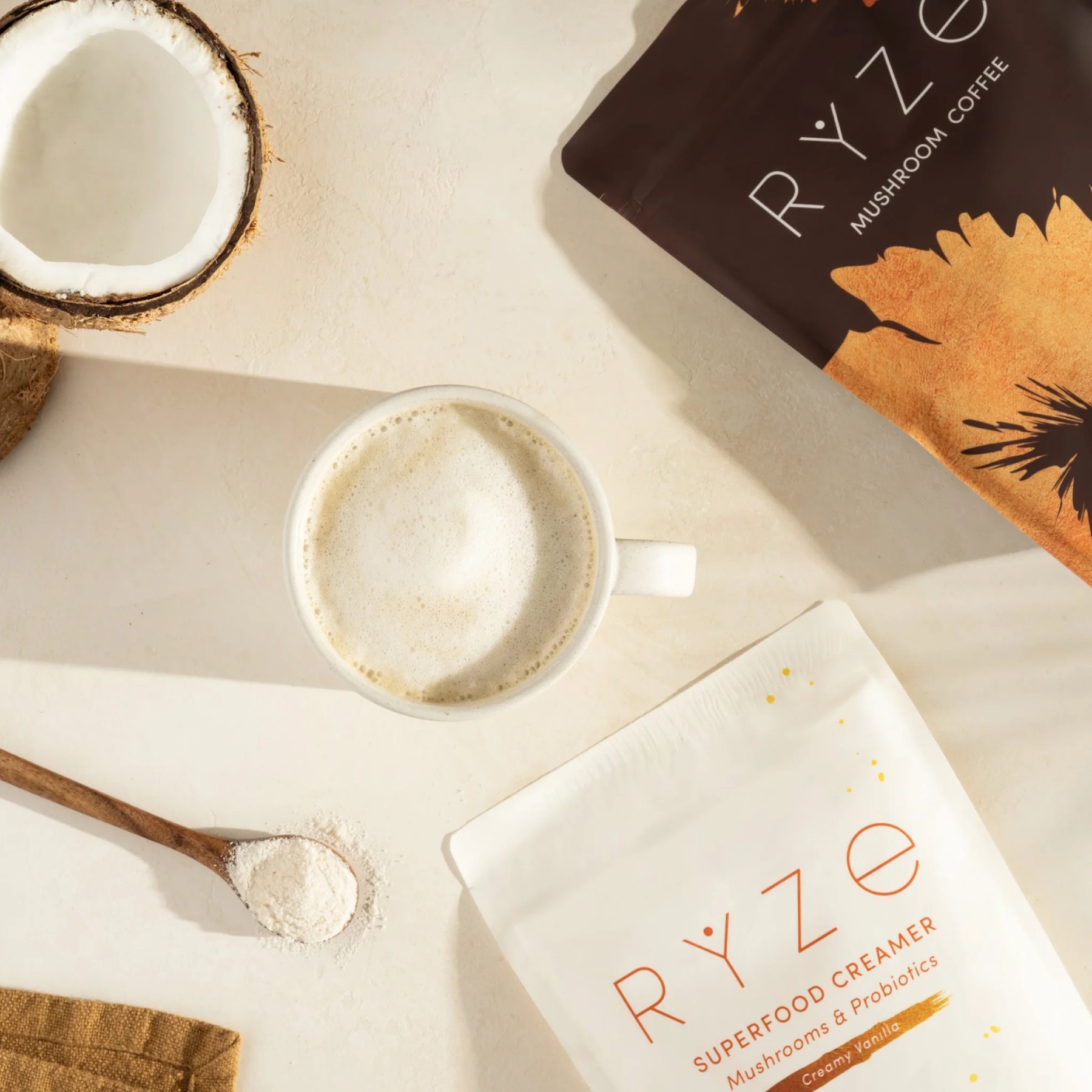
Our dark roast at 80 to 90mg per serving is for people who want a bolder coffee taste with Cordyceps and Reishi in the blend. We state the range on the page because instant powder, scoop fill and brew strength can shift the final cup. Stir into 8 to 10 oz of hot water, froth for foam, add nut milk or natural sweetener to taste. That is the whole routine. Feel a Little Better Every Day is not a slogan to us. It is the measure for whether the caffeine level is right.
You name shade grown organic arabica from Mexico that is roasted, brewed and spray dried into instant powder. Can you walk that coffee chain lot by lot, from harvest to dried powder, and say what changes at each step.
The coffee starts as shade grown organic arabica grown in Mexico. Shade grown means the plants grow under canopy, which slows ripening and shapes flavor. After harvest and processing at origin, the green coffee comes to us for roasting. Roast sets color and taste, medium for smooth, dark for bold. Then we brew it, the same idea as a strong pot, and spray dry that brew into instant powder.
Spray drying turns liquid coffee into a dry powder that dissolves in hot water. There is no grinder and no filter in your kitchen. The lot identity matters here. Harvest lot, roast lot, brew lot, dried powder lot. We keep that chain so we know which powder went into which finished batch. The powder is then blended with the mushroom ingredients plus MCT and fiber. That blend is what you stir into 8 to 10 oz of hot water. Simple on your counter, but each step has a place, a date and a weight behind it.
You grow certified organic mushrooms in California and Nevada, six of them including Cordyceps, lion’s mane and reishi. What growing method do you use, fruiting body or myceliated grain, and what does your extract ratio and standardised marker actually state.
We use six mushrooms, Cordyceps, lion’s mane, reishi, turkey tail, shiitake and king trumpet, grown as certified organic in California and Nevada. Certified organic here refers to how they are grown and handled under US organic rules, with audits and input records. They are dried after harvest, then prepared for blending with the coffee powder. Other ingredients are sourced in the US.
On the label we list the mushroom blend as foods taken for general wellness support rather than as medicine. What we can show today is origin state, organic certification, drying and blending records, and finished batch paperwork. What we have not published per lot is whether each mushroom is fruiting body only or includes myceliated substrate, nor the extract ratio or any standardised marker like beta glucan percent. Those three details are what Seed to Capsule readers use to compare mushroom products. To show it we would need to publish the specification sheet for each mushroom ingredient and match it to the certificate of analysis for each finished lot.
You state ingredients are tested for mycotoxins and heavy metals. Who takes the sample, what lab runs it, and what does a certificate of analysis let a buyer verify about a single batch.
Testing is part of every blend. Ingredients are tested for mycotoxins and heavy metals, which are the two risks we watch most in coffee and dried mushrooms. Coffee can carry mold related compounds if drying or storage is poor. Mushrooms can take up metals from substrate, water or air. So a sample from the lot goes to a third party lab, which means a lab separate from us and from our suppliers.
A certificate of analysis is the lab report for that lot. It lists what was tested, the method, the limit, and the result. For heavy metals that usually means lead, cadmium, arsenic and mercury against a stated limit. For mycotoxins that usually means aflatoxins and ochratoxin A against a stated limit. The report carries the lot or batch number, so you can match the paper to the powder in the bag. We have not published those reports lot by lot, and we do not name the labs in the brief. What it would take to show it is a lot lookup where a buyer types the code on pack and sees the matching certificate.
We didn’t set out to build a company, we just wanted to feel better.
Andrée Werner and Rashad Hossain
Your flagship Medium Roast blends coffee with a six mushroom blend plus MCT and fiber, while Dark Roast leans on Cordyceps and Reishi for a bolder cup. After more than a year of tinkering and taste tests, how did the two formulas diverge.
There were many late nights, countless tweaks, and more taste tests than we can remember. We poured everything into building our community and connecting with people who, like us, were seeking something better for their minds, bodies, and lives. After more than a year of tinkering, testing and taste tests we landed on six mushrooms plus premium organic coffee for the flagship.
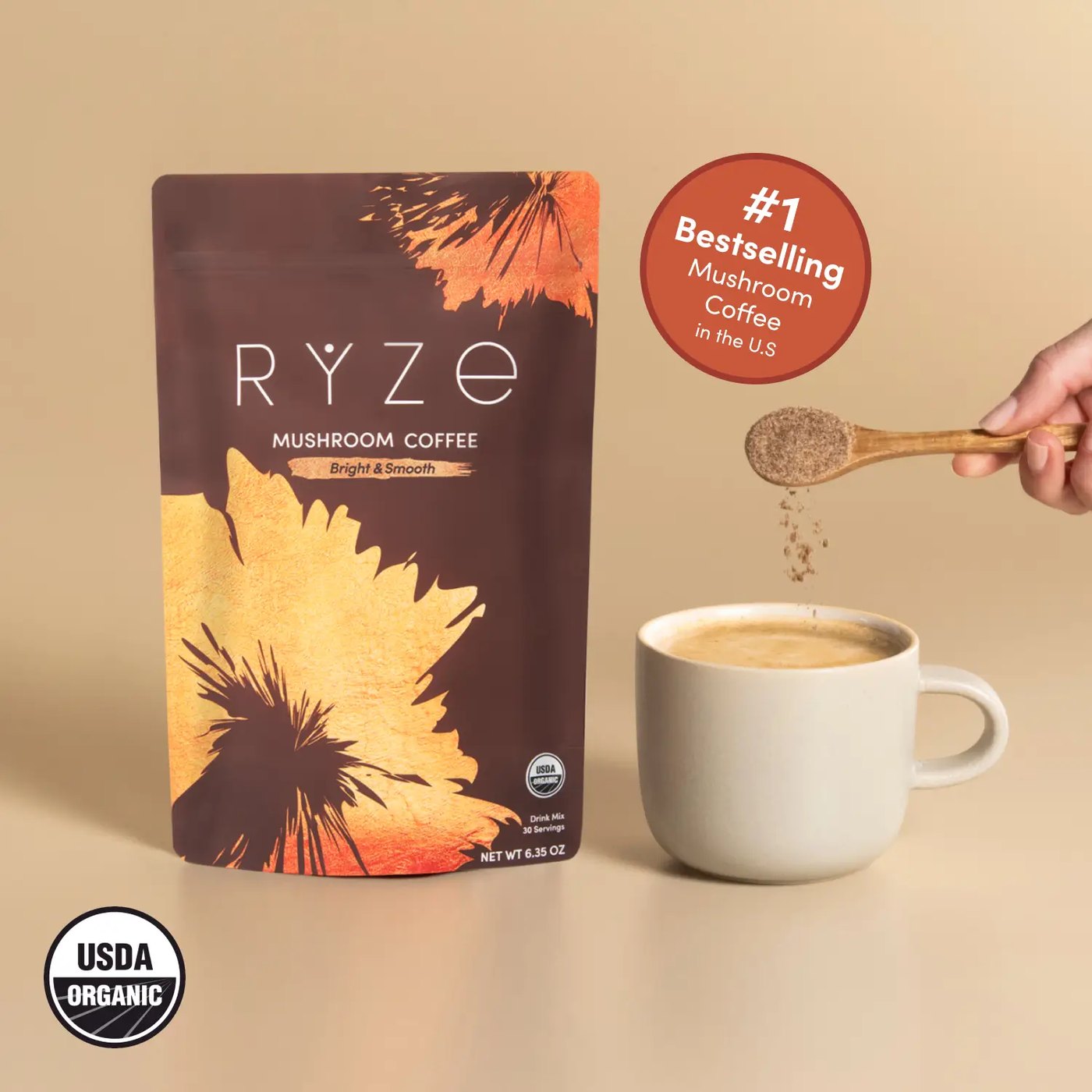
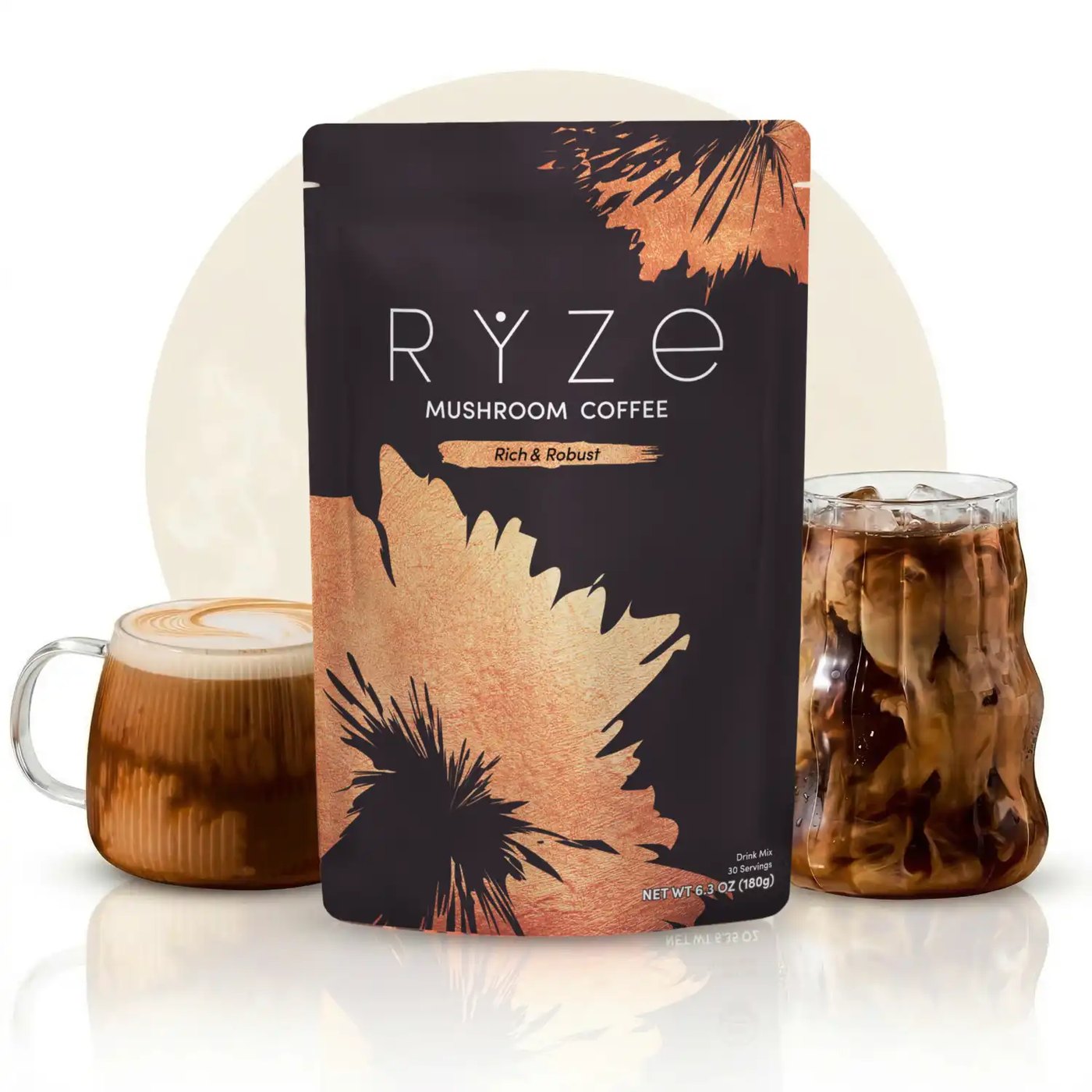
The medium roast is the daily cup, smooth and organic, about 48mg caffeine per cup, with the six mushroom blend and MCT for calm energy without the crash. The dark roast is organic instant dark roast with Cordyceps and Reishi, 80 to 90mg caffeine per serving, for a bolder coffee taste with mushroom blend. Same method, stir into 8 to 10 oz of hot water, froth if you like foam. One is breadth across six mushrooms, the other is depth on two with more roast character. Both keep the ritual simple.
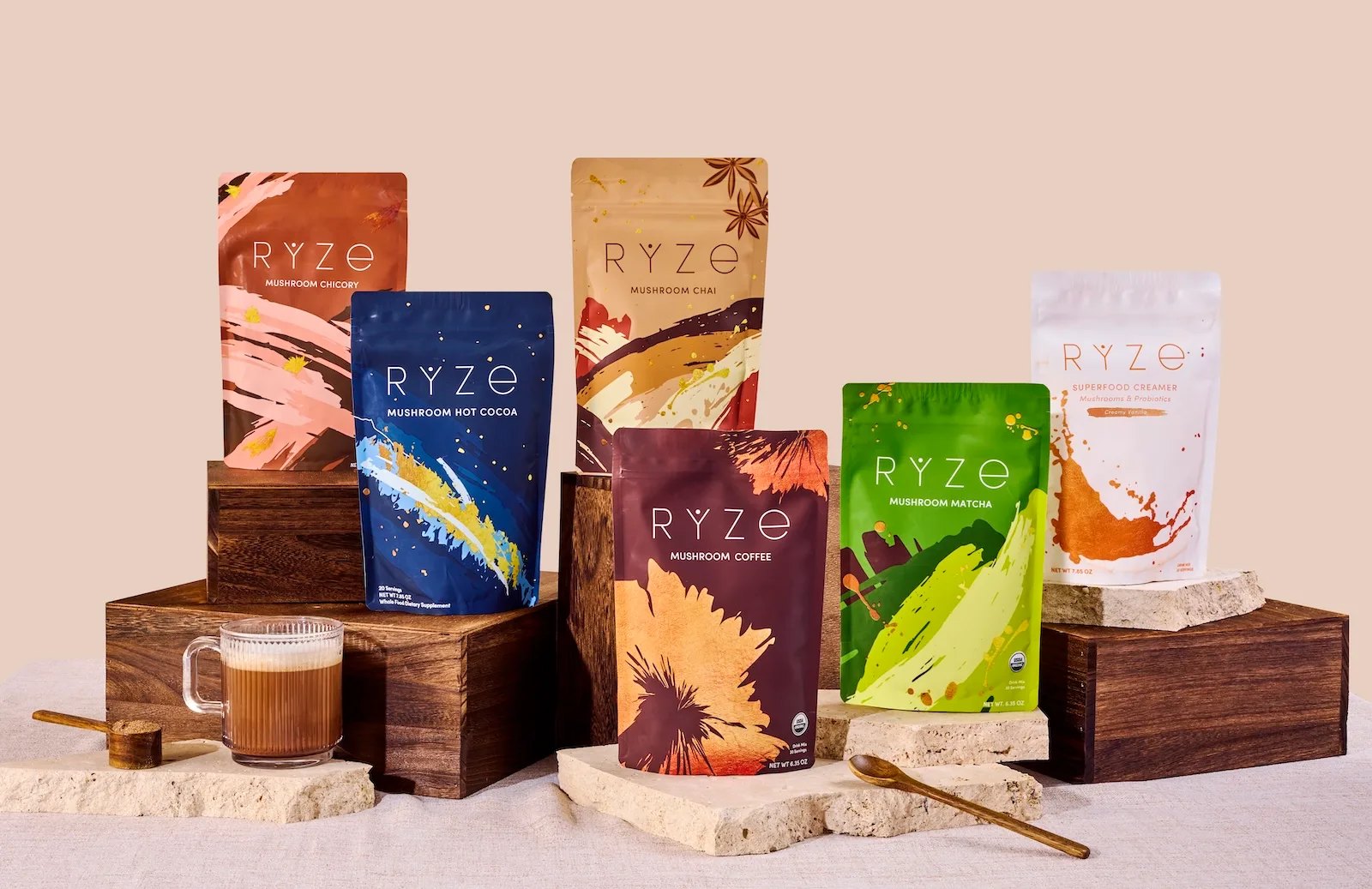
You report 219,503 reviews at 4.8 out of 5 and more than 200,000 five star reviews, and you ship from Texas while sourcing in the US. How do you keep lot identity intact from blending to the box that leaves the warehouse.
We launched online in March 2020 as a direct to consumer brand, and what began as a personal morning ritual grew into a daily routine for millions. We grow organic mushrooms in California and Nevada, source other ingredients in the US, and ship from Texas. That triangle only works if paperwork travels with the material.
In practice it means this. Each incoming ingredient has a lot number and a certificate. Blending creates a new batch number that lists which ingredient lots went in and at what weights. Fill weight is checked so each serving carries the intended amount of coffee and mushroom blend. The finished batch number goes on pack, and the Texas warehouse picks and ships against that number. Reviews tell us whether people repurchase and how the cup tastes. The batch record tells us what is inside that cup. We have learned that truly no one will understand your business the way you do, and you will never know anything until you try, so we keep testing the system with each run.
You often say feel a little better every day and talk about a RYZE Revolution built on community. What does that community ask you to prove next about provenance.
They ask where exactly does this come from, and how do you know. They read the Supplement Facts panel and the other ingredients line. They ask for the farm, the harvest, the drying method, the extraction detail, the lab and the limit. We are always more than happy to connect with other founders and give advice on how to build a brand via social media as well as growth hacks for e-commerce businesses, but our first job is to answer our own buyers.
So the next proof is simple and public. Publish the mushroom specification sheets, including plant part and extract ratio where used. Publish a sample certificate of analysis that shows heavy metals and mycotoxins with methods and limits. Add a lot lookup so any bag points to its report. Keep naming growers by state and coffee by country, then add harvest season when we have it. We would rather build community and genuine connections than sell coffee alone, and paperwork is part of that trust.
Closing note from the desk
What stays with us is the clarity of the chain they do name. Coffee country, mushroom states, roast and spray dry steps, blend with MCT and fiber, tests for mycotoxins and heavy metals, pack and ship from Texas. That is more provenance than many instant coffees provide, and it gives a careful buyer a place to start.
What is still opaque is also clear. No farm names, no fruiting body or extract ratio on the page, no public certificate of analysis per lot. RYZE set out to make a comforting coffee ritual with calm energy and simple use. The next step toward that goal is to let each bag point back to its own paper.
Product spotlight
Mushroom Coffee, 45 dollars for 30 servings. Organic instant medium roast with six mushroom blend plus MCT and fiber, about 48mg caffeine per cup. Stir into 8 to 10 oz of hot water, froth for foam, add nut milk or natural sweetener to taste. The brand positions it for a calm daily ritual.
Mushroom Coffee Dark Roast, 27 dollars for 30 servings. Organic instant dark roast with Cordyceps and Reishi plus mushroom blend and MCT, 80 to 90mg caffeine per serving. Same use, stir into 8 to 10 oz of hot water. The brand positions it for a bolder cup with the same simple routine.

Dana Kessler
Dana runs the news desk and the sourcing guides at Seed to Capsule. She files every certificate of analysis a brand sends her by lot number, and keeps a second list of the ones that never arrived.
More from Dana Kessler →