In January 2020 three friends launched a direct to consumer line for digestive relief after almost two years of research. Hilary Quartner, Nina Mullen and Lily Galef wanted remedies made from herbs with clinical backing and labels without dyes or sugars. This is how they source each herb, test each lot and explain what the bottle can and cannot prove.
In January 2020, Hilma debuted with natural digestive relief remedies. The decision the three founders made then was to start narrow, with digestion, rather than launch a broad line for every cabinet need. Hilary Quartner, Nina Mullen and Lily Galef had spent a full year researching the concept before pursuing it full time, then another year and a half developing products and building the brand.
They came to it as friends before they were business partners. Quartner and Mullen met at Harvard Business School. Galef and Mullen had known each other since childhood. The story they still tell begins with Galef with a cold, Mullen handing her a bright pink Emergen-C pack full of sugars and dyes, and all three noticing the gap between that packet and the considered labels they bought in food, skincare and cleaning products.
What Hilma is now is a supplement company built around solution focused labels, herbs sourced globally and capsules manufactured and tested in the United States. The founders state the products are formulated with doctors and scientists, that ingredients are vetted for clinical research, and that the company runs its own clinical studies. In late 2022 the company sold a majority stake to Biocodex Group and continued to operate independently under its umbrella.
What others miss is the paperwork behind the positioning. Seed to Capsule follows the material backwards, from capsule to field to lab. Hilma can name the structure, global herbs and domestic testing, more readily than it can name each grower and each lot in public. That distinction matters, and it runs through this conversation.
You handed Lily a bright pink Emergen-C when she had a cold, and that packet with sugars and dyes became the founding image. What did that moment raise about medicine cabinets being stuck in the past.
Nina Mullen: We were all friends prior to being business partners, and we really kind of connected over just a general excitement about this space and this market movement. Lily had a cold and I gave her that pack. It was bright pink, full of sugars and dyes, with outdated branding. It felt incongruous with the products we used in food, skincare and cleaning products.
We looked at our medicine cabinets with fresh eyes and they were stuck in the past. We had all had positive experiences using natural remedies for common needs, and we kept asking why there was not another option that was both natural and held the credibility of scientific approval from doctors and research. So we basically started working on creating a brand that we wish we had.
We decided to create Hilma because we believe that natural remedies should be effective and accessible, and that everyone should have a natural alternative to what is currently in their medicine cabinet. That belief has stayed steady. We are by no means anti medicine. We wanted choice, with labels people could read.
You spent a full year researching and diligencing the concept before pursuing it full time, and another year and a half developing products. What did those hundreds of customer interviews teach you about confusing tinctures and ingredient focused herbals.
Hilary Quartner: We spent a full year researching and diligencing our concept for Hilma before deciding to pursue it full time, and then spent another year and a half developing our products and building our brand. The process from idea to launch took almost two years. We did hundreds of customer interviews to confirm others wanted another option.
People told us they did not want confusing tinctures or ingredient focused herbals without research. They wanted to walk to the cabinet and find help for gas, an upset stomach, head tension, seasonal needs. They wanted the label to state the need in plain language. They also did not want over the counter pills as the automatic first option for every discomfort.
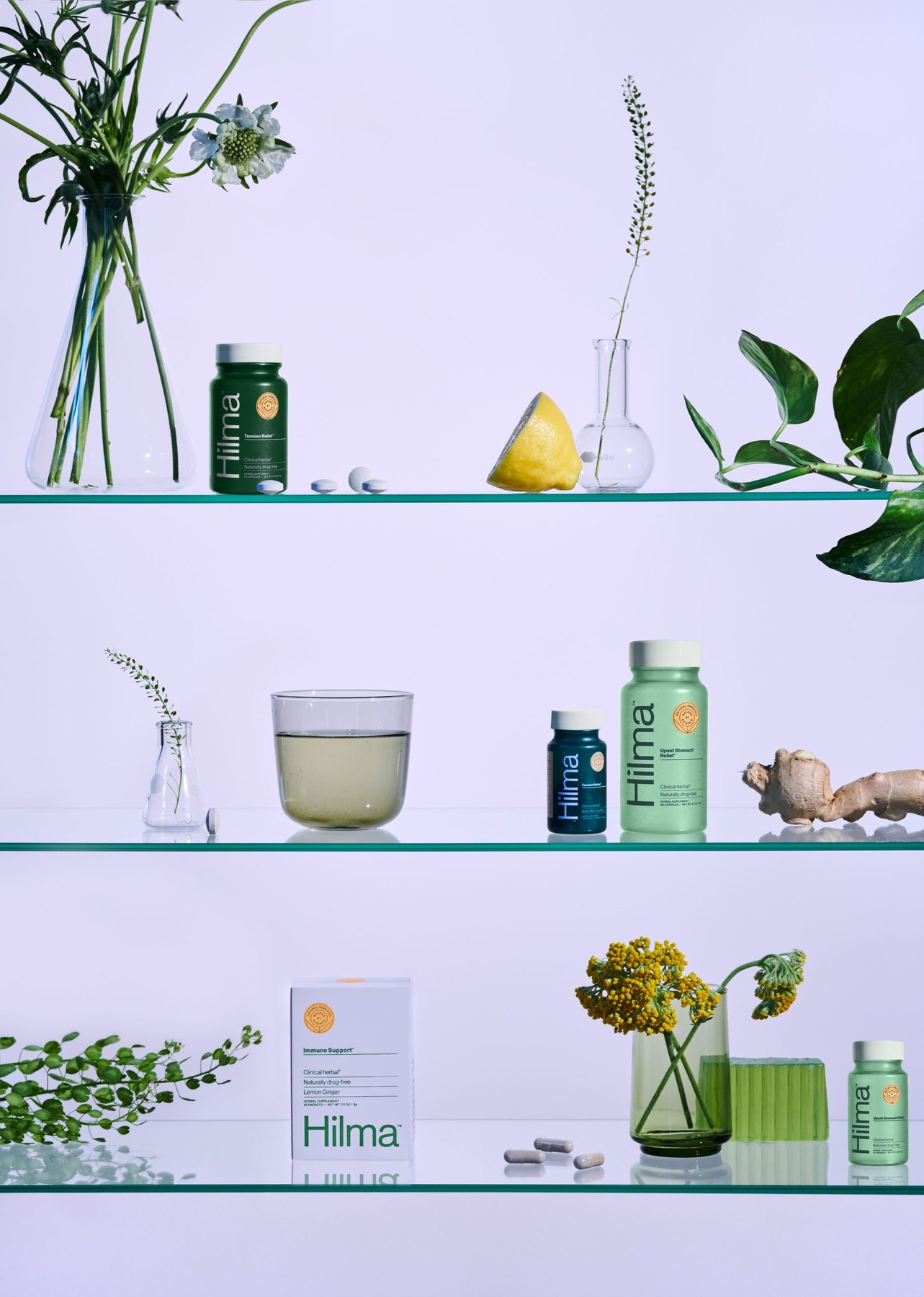
That shaped our assortment. We launched in 2020 with four products, including Immune Support, Upset Stomach Relief, Tension Relief and Indoor/Outdoor Support. Gas and digestion became the core because that was where the need was most frequent and where herbs had published study behind them.
None of you were doctors, herbalists or scientists at the start, so you built a Scientific Advisory Board first. Who sits on it and how does that board change a formula before it reaches encapsulation.
Hilary Quartner: At Hilma we take a rigorous scientific approach to product formulation. Because none of us were doctors, herbalists or scientists, building a Scientific Advisory Board was the first step. We formulate with doctors including a gastroenterologist, an internist, an allergist and a womens health specialist.
In practice, the board reviews the use case and the published literature for each candidate herb. We look for clinical research that supports use for that need, then we look at dose, extract form and safety profile. If an herb has tradition but thin data, it does not move forward. If the dose used in studies cannot be held in a capsule at a reasonable fill weight, we rework the combination.
We will continue to be a thought leader in the natural space by holding ourselves to a high standard of scientific rigor. That means our products are free of the dyes, sugars, and fillers that you can still find in the products in many homes today. By free of, we mean not added to the formula. The Supplement Facts panel and the other ingredients line show what is there.
You say you source herbs from all over the world depending on where the herbs grow and are of the highest quality. For a buyer reading the label, where exactly does the material in Gas and Bloat Relief begin, and what document follows it.
Lily Galef: We source our herbs from all over the world, depending on where the herbs grow and are of the highest quality. That is a deliberate choice. A plant harvested where it grows well tends to give more consistent material for extraction. From there the material is dried, milled and extracted into a powder or oil, then shipped for encapsulation.
Our products are all manufactured and tested in the US. Each incoming lot arrives with supplier paperwork, then our manufacturing partners test for identity and for contaminants including heavy metals and microbes before release. The certificate of analysis for the lot records those results. The finished batch has its own record, with fill weight and count.
What we publish today is the structure rather than every grower name and every lot number. We know that provenance buyers want field names and harvest dates. We can describe region and quality criteria and domestic testing. The step that remains opaque in public is grower level traceability by product, and what it would take to show it is lot level disclosure on the site.
You manufacture and test in the US but source globally, and you run your own clinical studies. What does a study on a Hilma product actually measure, and what does it not prove.
Nina Mullen: We run our own clinical studies on products because published research on single herbs does not always reflect a finished blend. A product study enrolls people with the relevant occasional need and tracks reported change over the study period, using questionnaires and standard digestive measures. The protocol, population and time frame are set before the study starts.
What it shows is how participants reported their experience while using the product as directed during the study. What it does not show is broader proof. Dietary supplement claims in the US carry the disclaimer that statements have not been evaluated by the Food and Drug Administration. Our labels describe support for occasional symptoms, not treatment of disease.
For Seed to Capsule readers, the useful detail is method and access. Who was studied, for how long, at what dose, and where the summary can be read. We point buyers to the label and to study summaries, and we keep the language to supports and helps relieve occasional discomfort, which is what the panel allows.
At Hilma we take a rigorous scientific approach to product formulation.
Hilary Quartner
Gas and Bloat Relief at 36 dollars is listed as a bestseller for occasional gas and digestive discomfort. Walk us from the dried herb to the capsule in the hand, including extract ratio, standardisation and fill weight.
Hilary Quartner: Gas and Bloat Relief starts as dried botanicals from global suppliers selected for region and quality. Each herb lot is identified to species, then extracted to a concentrated form. Where an extract is standardised, that means it is adjusted to a set level of a marker compound so one lot behaves more like the next. Where it is not standardised, we rely on extract ratio, which records how much starting herb makes one part extract, plus identity testing.
The powder or concentrated extract is blended with other ingredients listed on the Supplement Facts panel, then encapsulated. Fill weight is the weight of blend placed in each capsule shell. Count is checked by weight and by number. The 100 count bottle is sold as a two month supply and the 50 count as a one month supply, which tells you the intended daily count on the label.
Directions are to take as directed for gas and bloating relief. The other ingredients line shows capsule material and any flow aids. The seal, lot number and best by date tie that bottle to its batch record and its certificate of analysis.
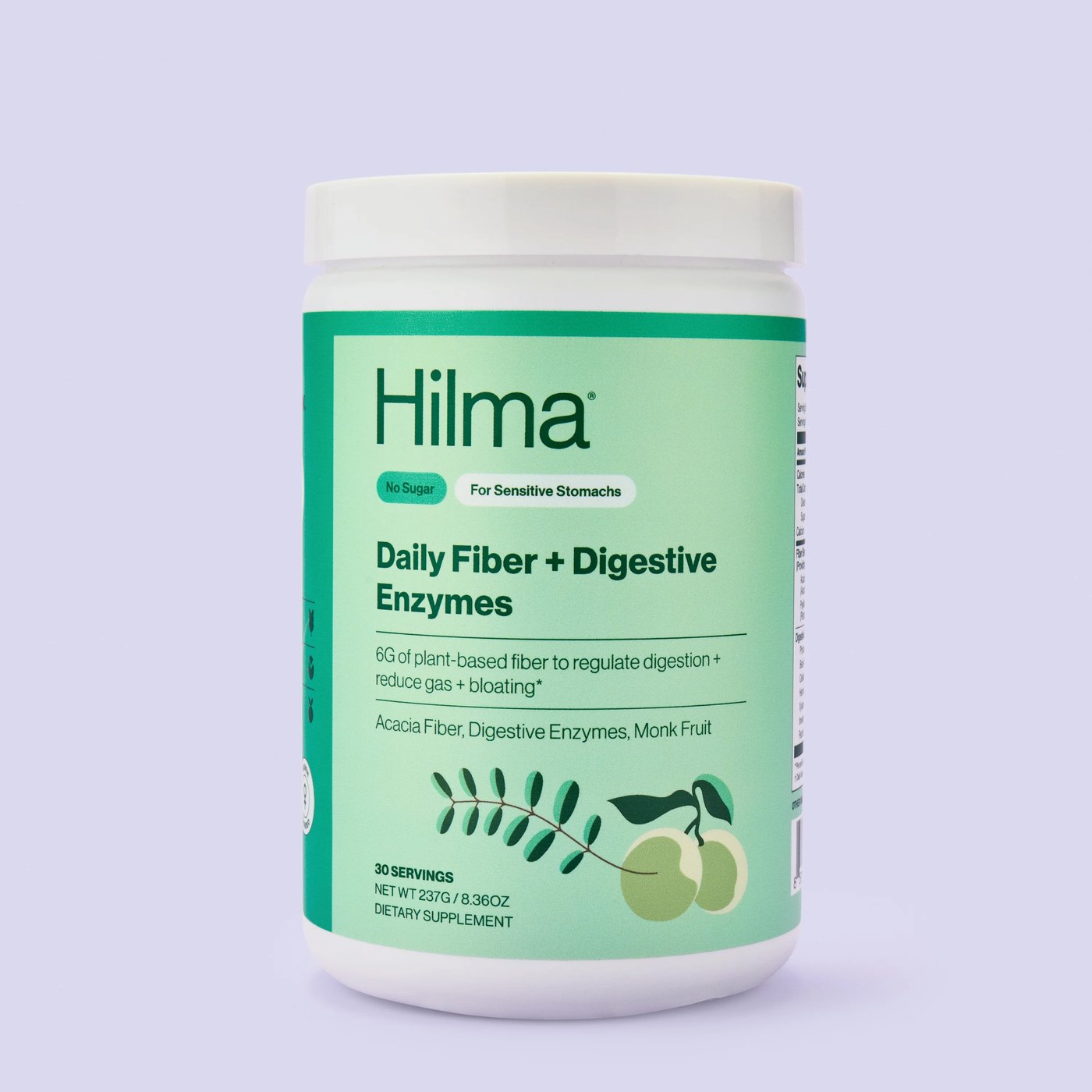
Daily Fiber plus Digestive Enzymes Powder at 22 dollars is described as plant based prebiotic fiber with enzymes for sensitive stomachs. How do chicory root fiber and enzymes move through your chain differently from herbs for gas.
Lily Galef: Fiber and enzymes follow a different path from leaf and root herbs for gas. The fiber here is prebiotic fiber from chicory root, which arrives as a processed fiber powder rather than a crude herb for extraction. The lot record focuses on fiber content, moisture and microbes. The enzymes are fermentation products, grown in tanks, harvested, dried and blended by activity units rather than by weight alone.
At blending, the fiber base and the enzyme blend are combined to a formula that mixes into water. How it is used is to mix powder daily for fiber and de bloat support. Because enzymes lose activity with heat and moisture, storage and packet or tub seals matter more here than with many dry herbs. Testing looks at activity through shelf life, not only at release.
The label shows fiber grams per serving and the enzyme blend by name and amount. That is the document the buyer can verify at home. Farm origin applies most clearly to the chicory root. Tank origin applies to the enzymes. We keep those origins distinct in our records even when they meet in one powder.
In November 2022 you announced the sale of a majority stake to Biocodex Group and said you would operate independently. What changed in sourcing, testing and retail after that, from Amazon and Target in 2021 to a major US drugstore chain.
Hilary Quartner: Our partnership with Biocodex will enable Hilma to rapidly scale our omnichannel retail strategy, reach new audiences and develop new products. The structure stayed independent under its umbrella. Day to day formulation and domestic manufacturing and testing did not change on announcement. What changed was capacity to plan retail and supply with a pharmaceutical owner.
The timeline helps. We debuted direct to consumer in January 2020. We launched on Amazon and in Target in 2021. We grew 100 percent year over year in 2022. The majority stake sale was announced in late 2022. A debut at a first major US drugstore chain was due in the first half of 2023. Each step added lot volume, longer forecasts and more retail compliance paperwork.
For provenance, larger runs mean more lots per herb and tighter scheduling with growers and extractors. Certificates of analysis still attach to each lot. The label still carries the lot code. Scale tests whether quality criteria hold when volume rises, and that is where we put attention.
You describe labels as simple and solution focused rather than ingredient focused. What must a careful buyer still read on the Supplement Facts panel to judge value at 72 cents to 80 cents per serving.
Nina Mullen: Simple means the front states the need, gas, fiber, dairy and gluten triggers, tension. The back carries the proof points a careful buyer needs. Read serving size and servings per container first. Our Gas and Bloat Relief lists 100 count as a two month supply at 36 dollars and 50 count as a one month supply at 20 dollars, which is how you get to cost per serving. Read the blend by weight or amount, then read the other ingredients line for capsule and flow aids.
Look for what we refuse, dyes, sugars and fillers in formulas, and verify it on the panel rather than taking the front at face value. Look for third party seals if present and know they are not all equal. Some certify manufacturing practice, some test finished lots for contaminants, some verify a single attribute. Our manufacturing and testing in the US sits under current Good Manufacturing Practice, with supplier certificates and finished batch records behind each lot code.
If value means anything here, it means amount per serving, clarity of the panel and consistency from lot to lot. Keep the bottle, keep the lot number, and compare one purchase to the next. That is how a small shelf of products earns its place over years.
Closing note from the desk
What stays after this conversation is method rather than marketing. The founders can explain why they started with digestion, how a board of doctors reviews each blend, and where global herbs meet domestic testing. They are precise about what they refuse on the label and careful to keep language to support for occasional needs.
What remains open is field level proof. Region and quality criteria are stated, lot testing is described, yet grower names and lot documents are not public by product. Hilma set out to make natural remedies that are scientifically backed and accessible, effective in the moment when needed. Judged as provenance, that goal now rests on showing the chain, lot by lot, from the place an herb grows to the capsule in the hand.
Product spotlight
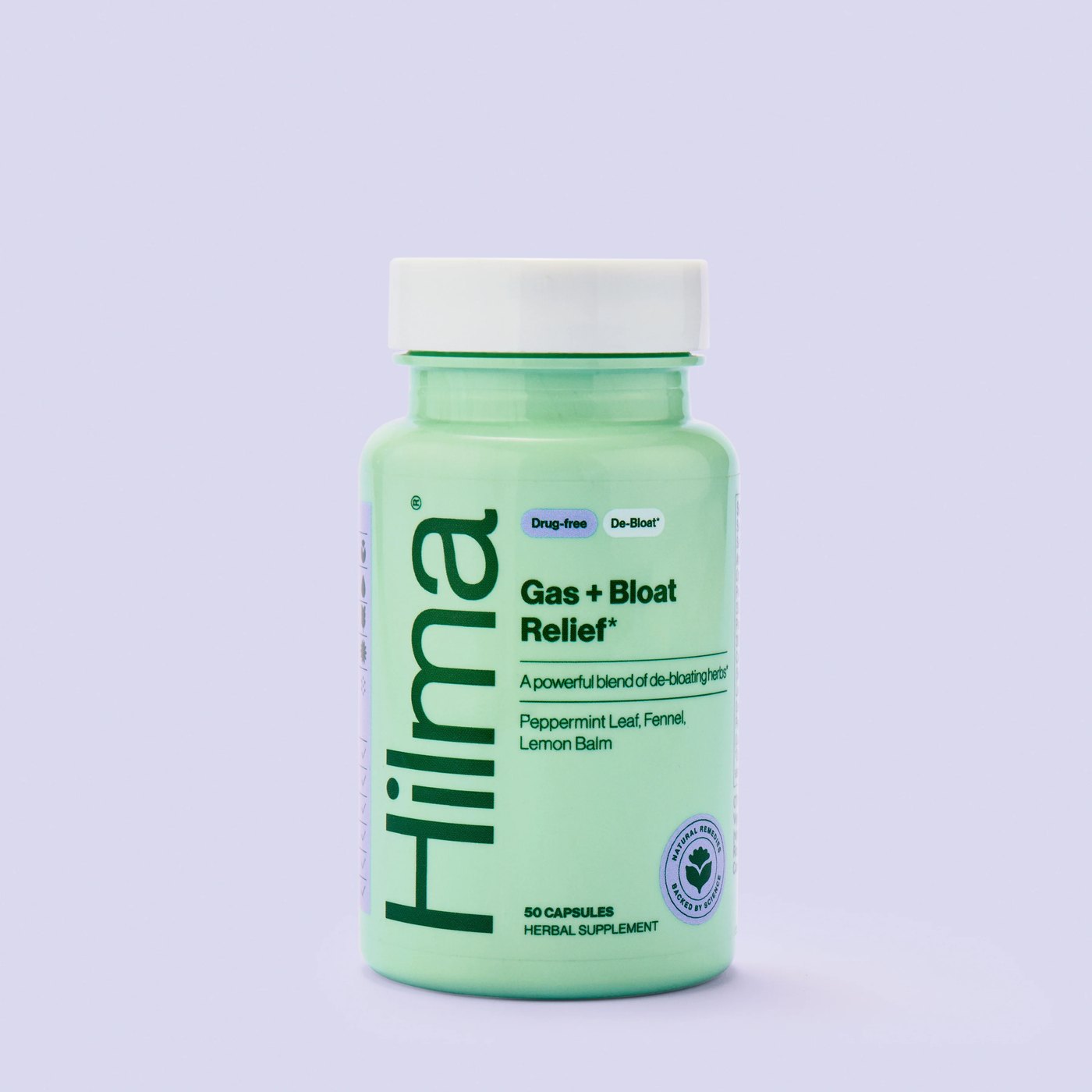
Gas + Bloat Relief, 36 dollars for 100 count and 20 dollars for 50 count, is the core digestive herbal for occasional gas, bloating and digestive discomfort. Take as directed on the label for the need in the moment. Read serving size and lot code to tie the bottle to its batch record.
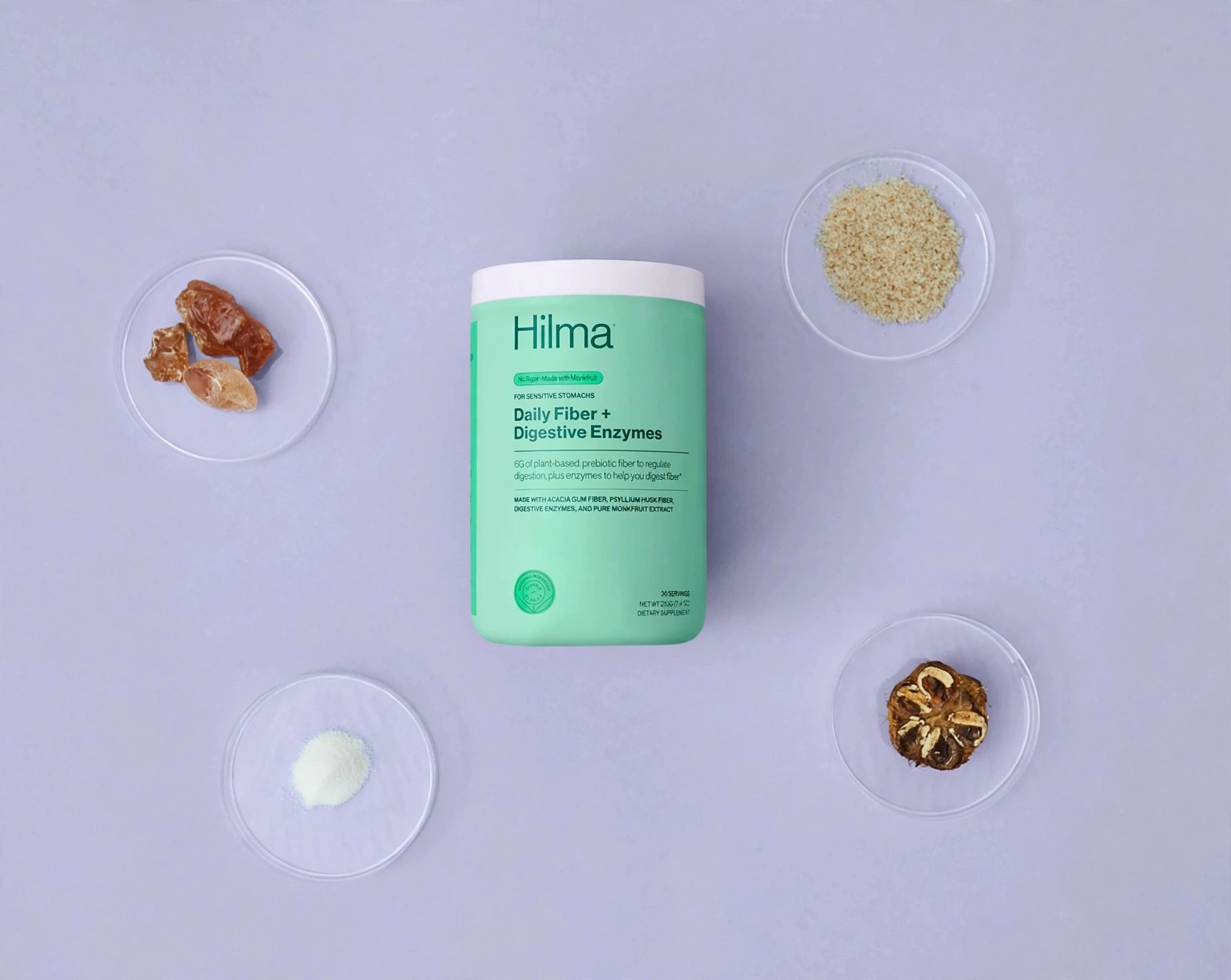
Daily Fiber + Digestive Enzymes Powder, 22 dollars, is the plant based prebiotic fiber with digestive enzymes made for sensitive stomachs. Mix powder daily in water for fiber and de bloat support. Chicory root supplies the fiber while fermentation supplies the enzymes by activity.

Kristen Decker
Kristen produces the interviews at Seed to Capsule: the research, the supplier maps, the follow-up calls. She asks for the name of the farm early in every conversation, and writes it down before the founder can change the subject.
More from Kristen Decker →