Two teaspoons of sugar sat at the bottom of a kids vitamin bottle. That was the number that started Hiya for two Los Angeles fathers who wanted full body nourishment for children with zero added sugar and zero gummy junk.
Two teaspoons. That is what Darren Litt and Adam Gillman say they found when they looked closely at the average childrens gummy. Two teaspoons of sugar per serving, stuck together in a bottle ordered from Amazon, with color and chew that looked more like candy than care.
Litt and Gillman were former co workers and fathers of young children in Los Angeles. They had followed a pediatrician recommendation, as careful parents do. What arrived made them ask a plain question. If I will not give this to my own kids, why would anybody. From that question came three years of work with pediatricians, nutritionists, scientists and parents.
Hiya launched on March 2, 2020 as a direct to consumer chewable with 15 essential vitamins and minerals plus a blend of 12 fruits and vegetables, sweetened with monk fruit. The brand now describes more than one million subscription parents and a line that includes probiotic, greens, iron and more. What Seed to Capsule noticed is how much of the story is about subtraction. No added sugar. No gummy additives. No synthetic dyes. No fillers. The work is in what was left out and what paperwork stands behind what stayed in.
You ordered a pediatrician recommended gummy on Amazon and it arrived stuck together with sugar settled on the bottom, and you later described the category as carrying as much sugar as a piece of chocolate cake. What did that bottle teach you about where kids vitamins start?
That bottle taught us we were looking in the wrong place. We were two dads trying to do the right thing. We asked the pediatrician, we ordered what was recommended, and what showed up looked like candy that had melted and reformed. It was sticky. It left sugar on the paper. Our kids liked the taste for the wrong reason.
To put it simply, we applied a Silicon Valley discipline to childrens health. We read the Supplement Facts panel line by line. We read the other ingredients line. We learned the average childrens supplement contains two teaspoons of sugar given to kids each and every day. Sugar addiction is an epidemic, and yet there it was in a product meant for daily use. Our imperative is to provide a childrens vitamin that does what it is marketed to do, without the unnecessary sugar and gummy junk. If kids ate steamed kale every day, they might not need a multivitamin. Most do not. So the daily format mattered, but the starting material had to change.
You spent three years formulating with pediatricians, nutritionists, scientists and parents before the March 2, 2020 launch. Who grew or supplied those first real food ingredients, and what did you accept or reject in those early lots?
We started with the refusal list. No sugar, no gummy junk, just what kids actually need. That sounds simple. In sourcing it is not. A gummy needs glucose syrup, gelatin or pectin, color and coating to hold together. Remove those and you have to rebuild chew, taste and stability from something else.
We worked with pediatricians on the levels, with nutritionists on the forms, with scientists on stability, and with parents on whether a child would actually chew it. The brief called for 15 essential vitamins and minerals plus 12 fruits and vegetables, sweetened with monk fruit. Lots that needed added sugar to taste right were out. Lots with synthetic dyes for color were out. Fillers that added weight without function were out. We kept lots where the certificate showed identity and the taste came from real food and monk fruit. We see our product not just as the vitamin you put in your mouth, but an experience that kids love. Kids do not wake up excited about vitamins per se. The chew had to earn its place on the counter.

Your promise names 15 essential vitamins and minerals plus 12 fruits and vegetables in one chewable sweetened with monk fruit. How does that powder become a tablet without gummy additives, and where does extraction or drying enter the chain?
The chain starts as produce and ends as a pressed chewable. In between is drying, milling, blending and pressing. Fruits and vegetables are dried to remove water, then milled to powder so a small fill weight can carry them. Vitamins and minerals arrive as separate inputs with their own lots. Everything meets in a blender, then goes to a press that forms the chewable.
Extract ratio matters here. It tells how much starting plant makes one part of extract. Standardised means one marker compound is held to a set level from lot to lot. Those two terms explain why two powders with the same name can behave differently. We set the formula, the supplier provides the lot paperwork, and the finished chewable has to hold together without the gummy system. That took time. Monk fruit provides sweetness without added sugar, and the flavors you find in candy are not in this tablet. The result is a chewable made in the USA that ships in a refillable glass bottle with monthly refill pouches, which also meant the tablet had to survive the pouch, the mail and a kitchen counter.
Hiya states its products are third party tested and made in the USA. For the multivitamin lot in a parents hand, what is actually tested, by whom, and what does the certificate of analysis show?
We grew very fast, probably as fast as any direct to consumer company out there, but we refused to compromise on safety, quality and testing. That sentence guided every scale decision. Third party tested means a lab separate from the maker and the brand checks the product against a specification.
For a chewable multivitamin, a certificate of analysis typically lists identity of inputs, potency of key vitamins and minerals against label claim, and limits for contaminants including heavy metals and microbes. Heavy metals means lead, cadmium, arsenic and mercury measured in parts per million or parts per billion against a limit. Microbial testing looks for indicator organisms and pathogens. The certificate belongs to a specific lot and batch. Batch is what was made together. Lot is how it is tracked. Parents can read the Supplement Facts panel for levels and the other ingredients line for excipients. The seal or statement on the label should name the tester or program. We keep that paperwork because trust without a document is just a claim.
Your label says zero added sugar and the site names monk fruit as the sweetener. What proves that claim on paper, and what do you still find opaque in sweetener or flavor supply chains?
What proves it is the formula record plus the finished label. The Supplement Facts panel shows total sugars and added sugars as separate lines. The other ingredients line must list the sweetener and flavor system. If monk fruit extract is the sweetener, it is named there. If there were added sugar, it would appear in both places.
What is still hard across the industry is flavor. Natural flavor can cover a complex blend from multiple suppliers. A buyer sees two words. The maker holds the detailed breakdown under confidentiality. That is an opaque step we watch. We can name what we refuse. We refuse added sugar. We refuse gummy additives. We refuse artificial dyes. We refuse fillers. To credit what is traceable, we point to the panel and the lot test. To name what is not yet fully open, we point to flavor houses where full disclosure would take supplier permission. What it would take to show it is simple. Itemized flavor components by lot, shared under the same certificate as potency and contaminants.
If I will not give this to my own kids, why would anybody?
Darren Litt and Adam Gillman
The Kids Daily Probiotic lists 10 billion live cultures selected for childhood needs. How do you trace a live organism from fermentation tank to chewable, and what does testing show at the end of shelf life?
A probiotic starts in a fermentation tank. That is a clean vessel where a single bacterial strain is fed and grown under controlled temperature and pH. The culture is harvested, concentrated, dried or stabilized, then blended to a target count measured in colony forming units. Colony forming units, written CFU, estimate live cells able to grow under test conditions.
From there the chain is about survival. Heat, moisture and time reduce live count. So the lot record shows strain identity, input CFU per gram, blend weight, and finished CFU at release. A careful label also accounts for CFU through end of shelf life, not only at the day it was made. Testing at release and at stability points shows whether the count held. Storage guidance on the label is part of that proof. For parents reading the panel, the strain names and the CFU number belong together. One without the other leaves the origin unclear. The chewable format adds a further check, since pressing force and moisture must be held within limits that keep the count where the label says it is.
The Kids Daily Greens plus Superfoods lists 55 whole food sourced ingredients with zero sugar and a chocolate taste for kids. With that many inputs, how do you keep farm origin and lot identity clear?
Fifty five inputs means fifty five lots. Each whole food ingredient arrives with its own origin, harvest date and lot number. Greens, fruits, vegetables and other plant powders are dried and milled before they reach the blender. The blender record is where traceability either holds or breaks.
We hold it by keeping each input lot separate until blending, then linking every input lot to one finished batch number. The finished canister carries that batch number. The certificate for the batch lists test results for the blend. Chocolate taste without sugar comes from cocoa plus monk fruit and flavor, all named in the other ingredients line. How it is used is simple on purpose. Stir powder into milk or a milk alternative. Behind that sentence is a blend sheet that records how many grams of each lot went into the tank. When a parent asks where exactly does this come from, the honest answer for a 55 part blend is a list, not a single farm. We keep the list by batch.
Hiya launched direct to consumer with a refillable glass bottle and monthly pouches, and you refuse plastic bottles. What does that packaging choice change in encapsulation, fill weight and stability?
Glass changes moisture and light exposure. A refillable glass bottle with a tight closure protects chewables from kitchen humidity better than a thin pouch left open. Monthly refill pouches use less material per serving than a new bottle each month, but the pouch film must still block moisture during mail transit.
Fill weight is the mass in each chewable or scoop. Encapsulation here means forming and protecting that mass, whether as a pressed tablet or a powder in a pouch. Stability testing checks potency, moisture, texture and taste over time in the actual package. A tablet that is fine in glass can soften in a pouch if the film breathes. A powder that pours well on day one can cake if moisture enters. So the package is part of the formula. We chose glass for the counter and pouches for refills because parents reuse the bottle and receive a fresh lot each month. The lot on the pouch should match the certificate for that month.
In 2024 USANA acquired a controlling stake implying a 260 million dollar valuation, with projections of more than 100 million dollars in net sales and over one million subscription parents. How does that scale change testing, sampling and what you can still name by grower?
Scale changes sampling first. More lots per month means more certificates, more retain samples and more stability pulls. Retain samples are sealed units kept from each batch so the maker can retest if a question arises later. At our volume, every batch is tested against specification before release. That discipline was the condition for growth.
Your instincts help you see what others missed and solve problems, and the data keeps you honest. But do not overindex on either. That is how we run sourcing. Instinct said parents would pay a premium for trust rather than chase the lowest price. Data keeps that honest through test pass rates, complaint rates and stability results. I preferred not to make much money rather than always be capped at what I can do working for somebody else. Independence still shapes decisions, even inside a larger structure. What we can name by grower is strongest where the chain is short. Where the chain runs through brokers or flavor houses, we name the step as not yet fully traceable and say what paper would close the gap.
Closing note from the desk
What stays after this conversation is a refusal list held steady through fast growth. No added sugar. No gummy additives. No synthetic dyes. No fillers. No plastic bottles for the daily counter. The founders speak parent to parent, and the detail that lingers is procedural rather than promotional. Lot numbers, blend sheets, retain samples, stability pulls.
Hiya set out to reimagine the daily childrens vitamin as full body nourishment that a child will actually chew. The brand states what the label shows and keeps the extra claims off the page. Some steps, especially flavor breakdowns and multi farm blends, remain partly opaque. The desk credits what is traceable and notes what paper would still help.
Product spotlight
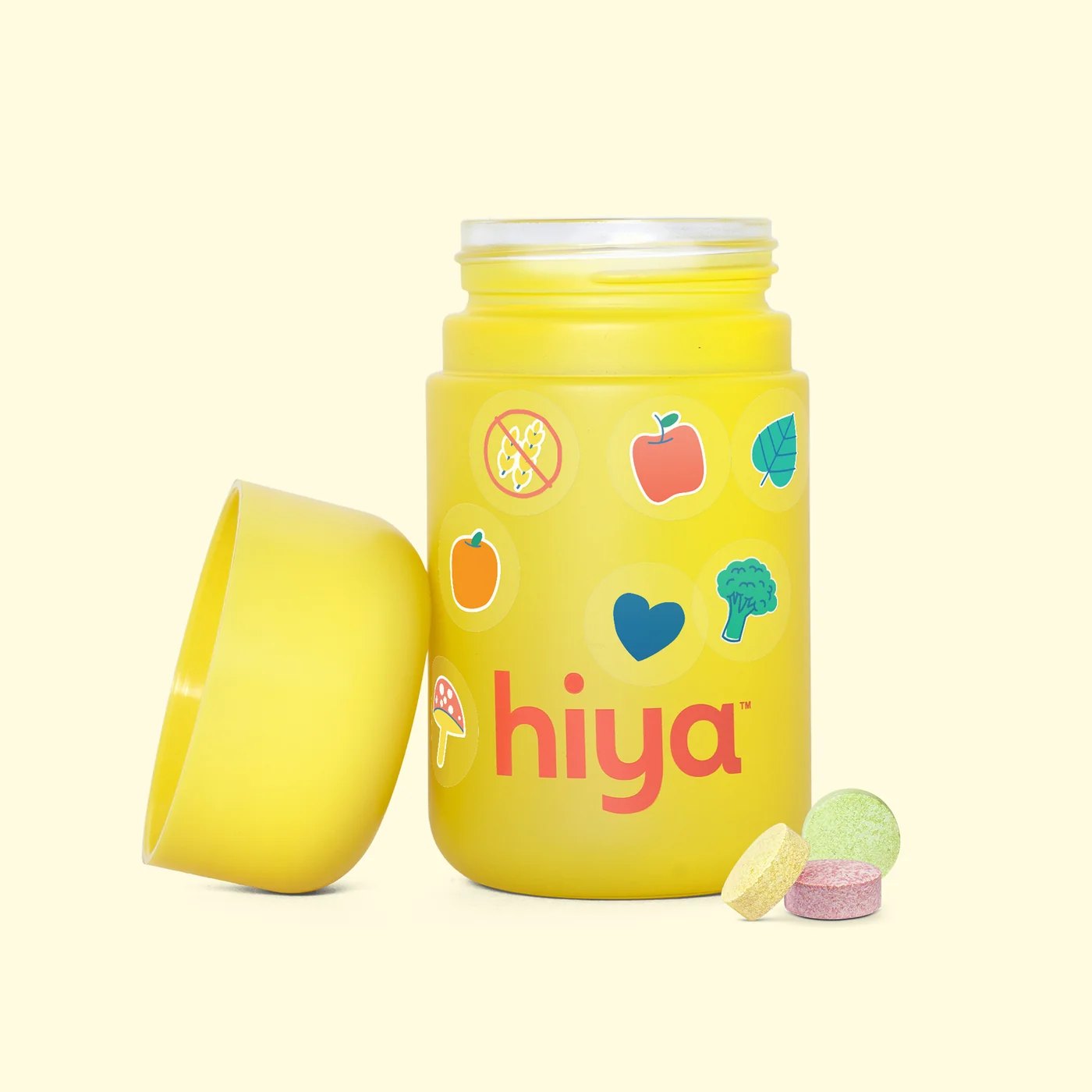
Kids Daily Multivitamin, 30 dollars for a one month supply for one child, taken as one daily chewable. It contains 15 essential vitamins and minerals plus a blend of 12 fruits and vegetables, sweetened with monk fruit with zero added sugar. Use as part of the monthly subscription with refillable glass bottle and refill pouches.
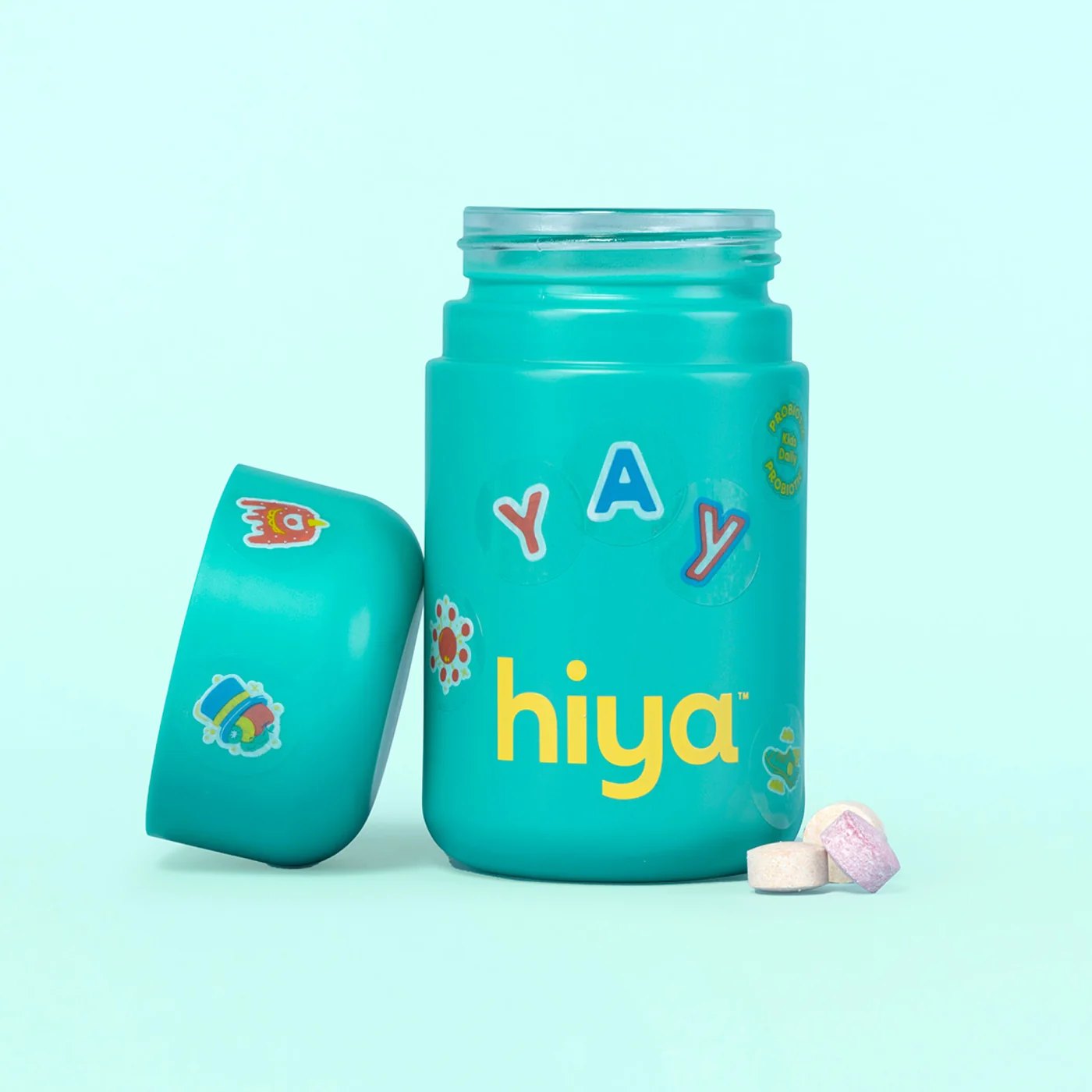
Kids Daily Probiotic, 30 dollars for a one month supply for one child, taken as one daily chewable. It lists 10 billion live cultures from strains selected for childhood needs, with levels and strain names on the Supplement Facts panel. Use daily for routine gut support as stated on the label, stored as directed to protect live count.

Dana Kessler
Dana runs the news desk and the sourcing guides at Seed to Capsule. She files every certificate of analysis a brand sends her by lot number, and keeps a second list of the ones that never arrived.
More from Dana Kessler →