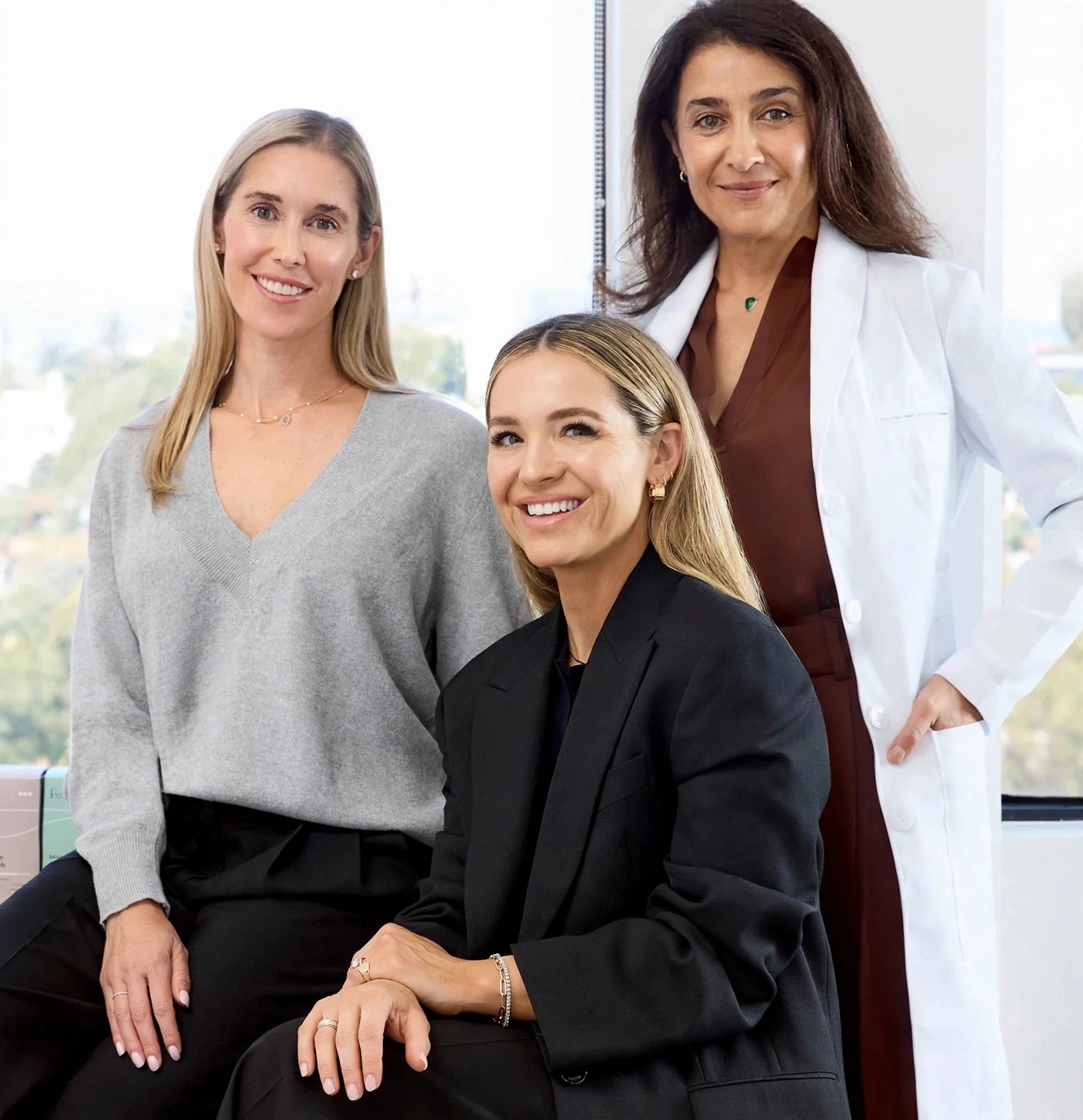
Every capsule, traced back to the field. For Perelel co founders Alex Taylor and Victoria Thain Gioia, that trace begins with two pregnancies, two daily handfuls of pills, and a meeting at Erewhon while both were breastfeeding. What followed was a trimester system built with doctors.
Alex Taylor started her mornings at the kitchen counter, sorting pills. Through fertility, pregnancy and postpartum, while managing thyroid disease, she bought vitamins from different stores and lined them up each day, trying to cover what one prenatal did not. She felt failed by the brands and information available to her.
Victoria Thain Gioia started from a different shock. In early 2019 her daughter was born with a cleft lip, with no common risk factors and no genetic link. She had taken prenatal vitamins she trusted. Then she learned that type of cleft was associated with folic acid deficiency, and that 40 to 60 percent of women carry an MTHFR variant that limits conversion of folic acid into folate, the usable form.
A mutual friend heard both women asking the same questions and said, you both are picking my brain about the same things, you need to meet. They met at Erewhon in Los Angeles. They were both breastfeeding at the time. By September 30, 2020, while both pregnant during the pandemic, they had launched Perelel with Medical Co Founder Dr. Banafsheh Bayati, a practicing OB/GYN in Los Angeles for more than 25 years, and a wider Perelel Panel of OB/GYNs, reproductive endocrinologists, dietitians and doulas.
What we noticed, and what others often miss, is not only the trimester packs. It is the paperwork logic behind them. Perelel states exact nutrients they need, in the right doses, at the right time. Seed to Capsule asked where each choice comes from, what the label proves, and what remains opaque in a category the founders describe as having essentially no specifications.
You sorted pills on the counter each morning while managing thyroid disease through fertility, pregnancy and postpartum. What did that pile contain, and what did it teach you about a one size prenatal?
Alex: That pile was my routine. I spent hours sourcing vitamins from all over and sorting pills each morning. As I was struggling through postpartum while also managing a thyroid disease, I felt failed by the brands and information available to me. One bottle said one thing, another said something else. Nothing explained timing. Nothing changed as my needs changed.
I kept asking, why isn’t there a prenatal vitamin that optimizes nutrients for each stage of a woman’s pregnancy. Timing is critical in nutrition. What you need when you are trying to conceive is not what you need in week eight, or week thirty, or six months after birth. The one size fits all approach asks a woman to guess. I did not want to guess anymore. I wanted a routine that stated what was inside, why it was there, and when to take it.
Your daughter was born in early 2019 with a cleft lip, without common risk factors. You had taken a trusted prenatal. How did you trace that back to folate?
Victoria: She was born with a cleft lip without having any common risk factors or genetic link. I had done what I was told to do. I had taken prenatal vitamins I trusted. Then I learned that type of cleft was associated with folic acid deficiency. That stopped me.
I started reading about folate in its methylated form, which is directly usable, while folic acid is synthetic and must be converted by the body. About 40 to 60 percent of women have an MTHFR variant which prevents converting folic acid into folate, the usable form. Folate intake during the first four to seven weeks of pregnancy is crucial because the neural tube closes and early brain development begins. Many women do not yet know they are pregnant in that window. I kept thinking about the label I had trusted. It did not tell me which form of folate I was getting, or whether my body could use it.

You met at Erewhon in Los Angeles in 2019 after a friend said you were asking the same questions. Why did that conversation turn into a company?
Victoria: A mutual friend said, you both are picking my brain about the same things, you need to meet. We were both actually breastfeeding at the time. We sat down at Erewhon and compared notes. Alex had her sorted pills. I had my questions about folate. We realized we were asking the same thing from two sides.
Alex: We learned there was essentially no regulation, no specifications around ingredients, and little information on what should be in a prenatal. The lack of regulation is startling, there is essentially none. We did not want to be the next Instagram brand. We wanted doctors to decide the formula. That is why we brought on Dr. Banafsheh Bayati as our Medical Co Founder. She has practiced as an OB/GYN in Los Angeles for over 25 years. Then we built the Perelel Panel with Drs. Andy Huang, Brian Levine, Amber Samuel and dietitians, doulas and practitioners, so each stage had clinical input.
You launched on September 30, 2020, while both pregnant in the pandemic. What did We launched in September 2020, which was a challenge in and of itself mean in practice?
Alex: We launched in September 2020, which was a challenge in and of itself. We were both pregnant. Clinics were restricted. Supply chains were slow. We were testing packaging from our homes and taking formulation calls between prenatal appointments.
Victoria: We are the first and only OB/GYN founded prenatal vitamin offering trustworthy targeted, comprehensive vitamin routines for each distinct phase of becoming a mother, from preconception through pregnancy and into postpartum. That sentence carried weight because we had to prove it while everything else felt uncertain. Every lot had to be made, tested and packed as a daily pack. Every label had to show the Supplement Facts panel and the other ingredients line clearly. You have to have clarity in your vision and stay steadfast. That was the only way through that fall.
You refuse synthetic folic acid where methylated folate is absorbable. Walk us from the field to that capsule. Where does your folate begin?
Victoria: Our belief is simple. We would rather use methylated folate than synthetic folic acid. Folate in food comes from leafy greens and legumes. What goes into a capsule is made by synthesis and fermentation, then dried, milled and tested for identity and strength. We specify the methylated form because it is directly usable.
Alex: What we can trace and show is the finished chain. The supplier provides a certificate of analysis. A third party lab verifies the lot. The label states the form and the dose. What we cannot yet name for the reader is the farm or fermentation tank for every lot, because suppliers change and lots rotate. I will say plainly where we are strong. Form, dose and testing are documented. Field level provenance for each nutrient is still opaque. What it would take to show it is lot level disclosure, grower names and extract ratios where botanicals are used, printed or linked from the pack.
We would rather use targeted stage based formulas than one size fits all vitamins.
Alex Taylor and Victoria Thain Gioia
Your hero system moves from Conception Support Pack to trimester packs to Mom Multi Support Pack. What changes in the formula, and why?
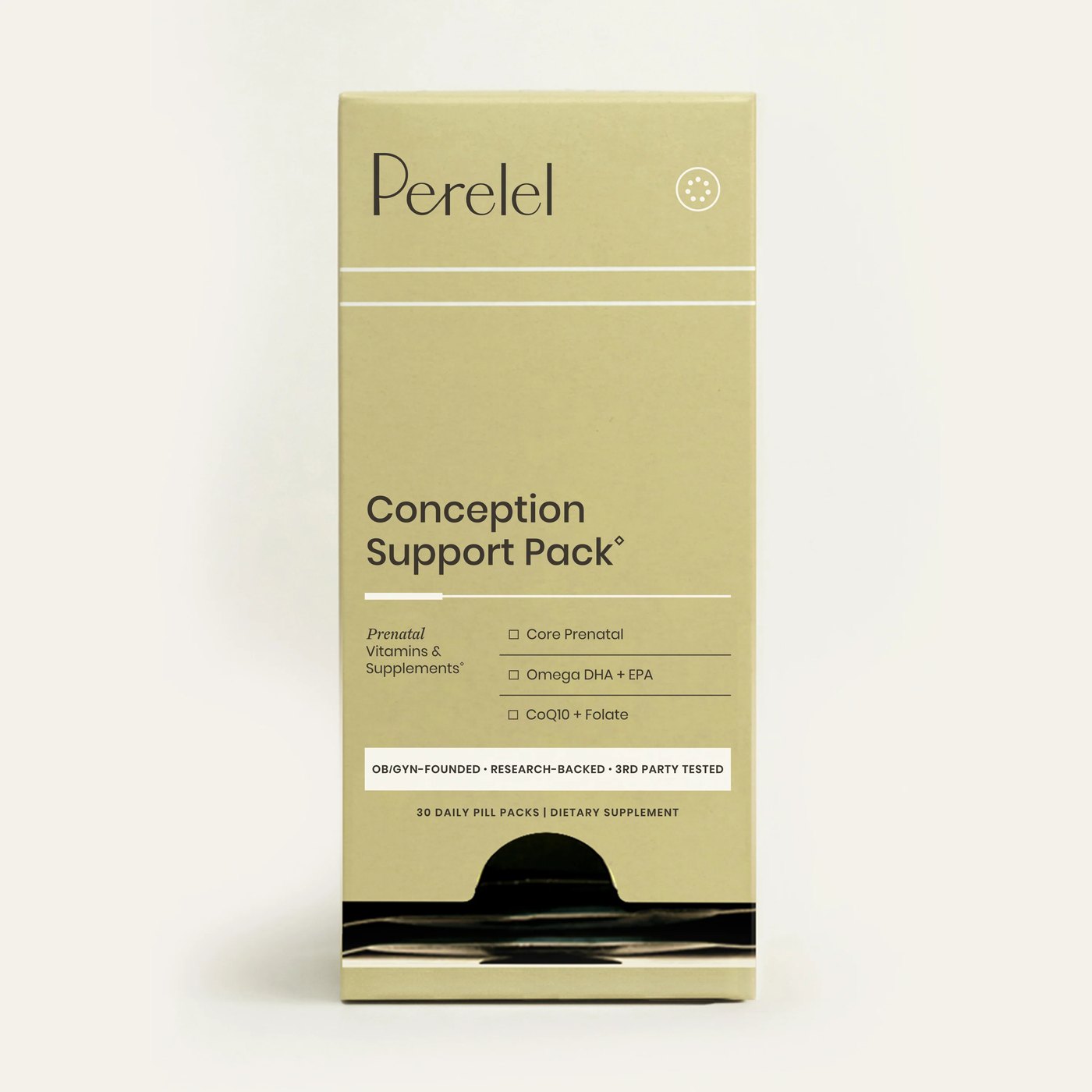
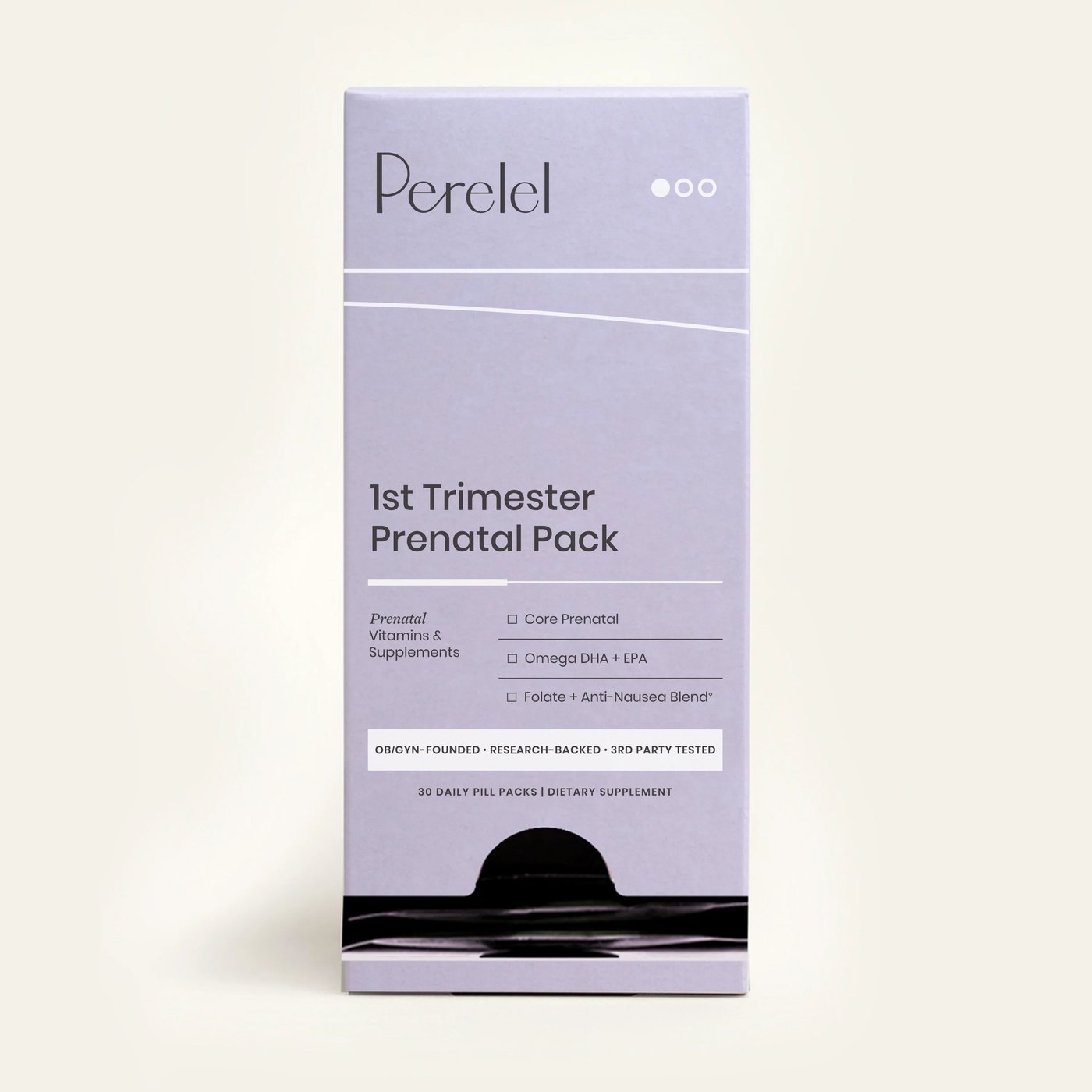
Alex: The idea is exact nutrients they need, in the right doses, at the right time. Conception Support Pack is our anchor for trying to conceive. The 1st Trimester Prenatal Pack keeps folate focus for neural tube and early brain development. Later packs adjust minerals as blood volume rises and bones harden, and iron needs shift.
Victoria: Mom Multi Support Pack extends care up to five years post pregnancy, which is actually how long the postpartum period technically lasts in our framing. Many women stop a prenatal after birth. We formulated a routine for the fourth trimester and motherhood, when sleep is short and diets are uneven. Each pack is a daily routine, not a single pill. The label shows what changed and by how much. If a customer reads the Supplement Facts panel across stages, she can see the logic. That is intentional.
Perelel states it sold 67 million capsules and grew to 21 SKUs by 2023. How do you keep dose and quality steady at that scale?
Alex: Scale tests paperwork. By 2023 we had sold 67 million capsules and expanded to 21 SKUs. Each SKU has its own formula, its own suppliers, its own testing. Doctor recommended doses mean nothing without verification.
Victoria: Our process is formulated by Medical Co Founder Dr. Banafsheh Bayati with the Perelel Panel using bioavailable ingredients in doctor recommended doses, packed as daily packs. Bioavailable here means forms the body can absorb, like methylated folate instead of folic acid. Standardised, where it applies, means an extract is adjusted to a set level of a marker compound. We rely on certificates of analysis and third party labs for heavy metals, microbes and strength. Where words like pure appear in marketing, we treat them as claims that need a document. The document is the test result for that lot.
In 2024 you pledged 10 million dollars to fund women’s health research and acquired LOOM. Why put money into research when you sell vitamins?
Victoria: Women’s health is one of the most under funded and under researched sectors of medicine. We felt it as patients. We heard it from doctors. A vitamin cannot close that gap.
Alex: In 2024 we pledged 10 million dollars to fund women’s health research and launched a national campaign and petition. That same year we acquired LOOM, which focuses on education. When we were fundraising, many deemed women’s health as too niche and motherhood as too short a window. That was the worst response we got. Research funding and education are part of provenance too. They show where knowledge comes from. We want healthy, supported women, and that starts with better data, not bigger claims.
Fundraising pushback is part of your story. What did investors miss that mothers understood right away?
Alex: Investors saw a narrow window. Mothers saw years. Conception, pregnancy, postpartum, motherhood, perimenopause. That is not niche. That is a household. Our customer buys for herself and often thinks about a partner, a parent, a child. She keeps a small shelf for years.
Victoria: She reads the label. She looks for the form of folate, the dose of choline, the other ingredients line. She knows timing matters. We refused to treat the research gap and regulation gap as acceptable. We would rather have OB/GYNs formulate products than be another Instagram brand. That clarity helped us keep going when the answer was no.
Closing note from the desk
What stays with us is the image of two women breastfeeding at Erewhon, comparing labels instead of exchanging pleasantries. That candor carried into manufacturing records, panel formulation and lot testing. Perelel is easier to read than most prenatals because the stage system forces disclosure of what changed and when.
The brand set out to replace a single generic prenatal with targeted, doctor made nutrition that changes with women through each hormonal stage. On provenance, it shows form, dose and testing clearly. Field level origins remain the next page to open, and the founders name that gap without hedging.
Product spotlight
Conception Support Pack, 58.77 dollars. A daily pack routine for trying to conceive, formulated with obstetricians and reproductive endocrinologists. The label states each nutrient form and dose for the preconception window. Take the daily sachet with food and water as directed, and keep lot and testing questions for the brand.
1st Trimester Prenatal Pack, 58.77 dollars. A daily pack for weeks 1 to 13, with folate focus for the period when the neural tube closes and early brain development begins. The pack format separates nutrients for stability and clarity. Take daily as directed and read the Supplement Facts panel for form and dose.

Kristen Decker
Kristen produces the interviews at Seed to Capsule: the research, the supplier maps, the follow-up calls. She asks for the name of the farm early in every conversation, and writes it down before the founder can change the subject.
More from Kristen Decker →