Shane Heath spent years drinking five or six coffees a day, then started carrying a 32 ounce hydro flask of cacao, chai and mushrooms to work and jiu jitsu. In May 2018 he ordered jars, built a site and launched MUDWTR to rethink the morning ritual, one lot and label at a time.
In May of 2018, Shane Heath ordered jars and labels, built a website and launched MUDWTR from Venice and Santa Monica, California. He was 15,000 dollars in debt and working a full time design job at tech startups.
He had grown up in Santa Cruz, California. He drank upwards of one thousand milligrams of caffeine a day and felt the cost at work and at home, with anxiety, poor sleep and less room for creative work. He loved the smell and flavor of coffee, and the ritual most of all, but he wanted a morning routine that was more than a vessel for high doses of caffeine.
What began as a mix for himself became a company now run by a 32 person remote team. The flagship was a cacao blend with masala chai and mushrooms, later joined by matcha and turmeric blends, then protein. The brand says every blend is USDA Certified Organic, with mushrooms grown in California, blended and packaged in the United States.
What others miss is the provenance question inside a habit product. This interview follows the powder backwards, from the mug to the farm, the drying and extraction step, the lab paperwork and the Supplement Facts panel, with credit for what is traceable and plain language where the chain is still thin.
Thank you for sitting down with us, Shane. In May of 2018 you ordered jars and labels and launched MUDWTR while in debt and working full time. What did that decision force you to learn about sourcing first, before branding?
I created this drink for myself. It was my own exploration of finding the ingredients I believed in to solve my need. I like coffee. The smell, the flavor and more importantly, I love the ritual. I was probably drinking five or six cups of coffee or some caffeinated beverage a day and I stopped to question all my habits and realized my coffee consumption was not giving me energy.
When I started MUDWTR, I was 15,000 dollars in debt and working a full time job. So in May of 2018, I launched MUDWTR to help people rethink their relationship with coffee. Early on I mixed batches in a commercial kitchen, then we moved to a co packer as volume grew. The message on day one was simple. I am not mad at coffee, just disappointed, so I made something better. That restraint shaped sourcing. Our products are in many ways like a lead domino or a Trojan horse. The drink is the entry point, but the supply behind it has to hold.
You carried the early mix in a 32 ounce hydro flask while working, training jiu jitsu and painting, and coworkers kept asking what was in the mug. What was actually in that flask, and how did decaf coffee become cacao, chai and mushrooms?
I loved the ritual of coffee, but I wanted my morning routine to be more than just a vessel for high doses of caffeine. At first I started adding things to decaf. Then I built the mix around cacao and masala chai, with adaptogenic mushrooms and spices, including lion’s mane and cordyceps. I carried it in a 32 ounce hydro flask while I worked, trained and painted, and people kept asking what was in my mug and if I could make them some.
My mom has worked in the mushroom space since before I was born. She worked in IT for one of North America’s largest mushroom growers, so I had early exposure to that world. I did not grow up as a mycologist, but I knew where to ask questions. The brand says each strain is researched for demonstrated efficacy, and I name lion’s mane for focus, cordyceps for energy and reishi for immunity as the way I think about the set. That flask period mattered because it was daily use, not a concept. It had to mix, taste and travel.

Your mother worked in IT for one of North America’s largest mushroom growers. How did that shape where your mushrooms come from now, and what does grown in California prove on paper?
My mom has worked in the mushroom space since before I was born, so mushrooms were normal in our house long before they were a trend. That gave me a starting point and a respect for growers. Today we say our mushrooms are grown in California. That origin is part of the label story, and it sets expectations for oversight, harvest records and handling before drying and milling.
What it proves depends on the paperwork behind each lot. Grown in California tells you place. It does not by itself tell you fruiting body or mycelium content, extract ratio, standardization or test results. For that you need the certificate of analysis from a third party lab, with identity, heavy metals and microbial counts tied to a lot and batch. I want buyers to read the Supplement Facts panel and the other ingredients line, then ask for the lot paper. Place matters, then the lab confirms what left the farm and what went into encapsulation and fill.
You refuse synthetic pesticides, herbicides and seed oils across blends that are USDA Certified Organic. For a careful buyer reading the panel, what does that refusal change in the field and in the blending room?
We state it plainly. Our blends are USDA Certified Organic with no synthetic pesticides and herbicides and no seed oils. That is a handling and formulation choice that starts at the farm and shows up in blending and packaging in the US. Organic certification restricts what a grower can apply and requires records and inspection, so the claim has a document behind it.
In the blending room it means the formula stays spare. No seed oils as carriers, no synthetic pesticide residues allowed under the standard. Coconut and creamer components are chosen to keep the mix plant based and to hold texture without those oils. For the reader at home, the check is simple. Look for the organic seal, read the other ingredients line for oils and carriers, and look at fill weight and serving count. A 30 serving tin should read as 30 servings, with lot consistency from tin to tin.
You describe the products as a lead domino or a Trojan horse for healthy minds through healthy habits. With more than 130 million servings of the rise line sold by 2023, how do you keep that habit message tied to extraction and testing rather than hype?
Our products are in many ways like a lead domino or a Trojan horse. The phrase we use is create healthy minds through healthy habits. The drink starts the morning differently, with less caffeine and a steady ritual, and the rest of the day follows. By 2023 we had sold more than 130 million servings of the flagship rise Cacao blend, and in 2022 we sold about 1.4 million units to about 443,000 customers in the past 12 months.
Scale makes traceability harder, not easier. Early batches were mixed by me in a commercial kitchen. Later we moved to a co packer, with blending and packaging in the US. That is why I point to the unglamorous parts. Extract ratio tells you how much raw material went into an extract. Standardised tells you what marker is held constant. A certificate of analysis ties identity, heavy metals and microbes to a lot. I have a belief that to stand out, you have to find a way to zig where other people are zagging. For us, zigging is paperwork and restraint.
I am not mad at coffee, just disappointed, so I made something better.
Shane Heath
Your flagship cacao blend sits next to a 100 percent organic matcha with naturally occurring L theanine and a zero caffeine turmeric with mushrooms and mycelium. How should a buyer read those three labels differently by origin and process?
Start with place and process. Our matcha blend is 100 percent organic, made with spices and mushrooms, with just a fraction of the caffeine of coffee, as well as naturally occurring L theanine. Matcha is shade grown tea, stone milled, so origin, harvest and milling show up directly in color and texture. The cacao blend layers cacao with masala chai and mushrooms, including chaga, reishi, lion’s mane and cordyceps with turmeric, so the label shows more origins in one tin.
The turmeric blend has zero caffeine, with turmeric, spices, mushrooms and mycelium. Mycelium and fruiting body are different stages of the organism, and buyers often confuse them. Fermentation, drying and extraction change what ends up as powder or oil before encapsulation or tin fill. Read the panel for which part was used and whether an extract ratio or standardization is stated. If it is not stated, ask. The label is the start of the trail, not the end.
By 2023 the rise blends were in more than 500 Target stores, you had opened the gather cafe in Santa Monica and expanded to Canada and the UK. What did retail and a cafe teach you about lot consistency from tin to cup?
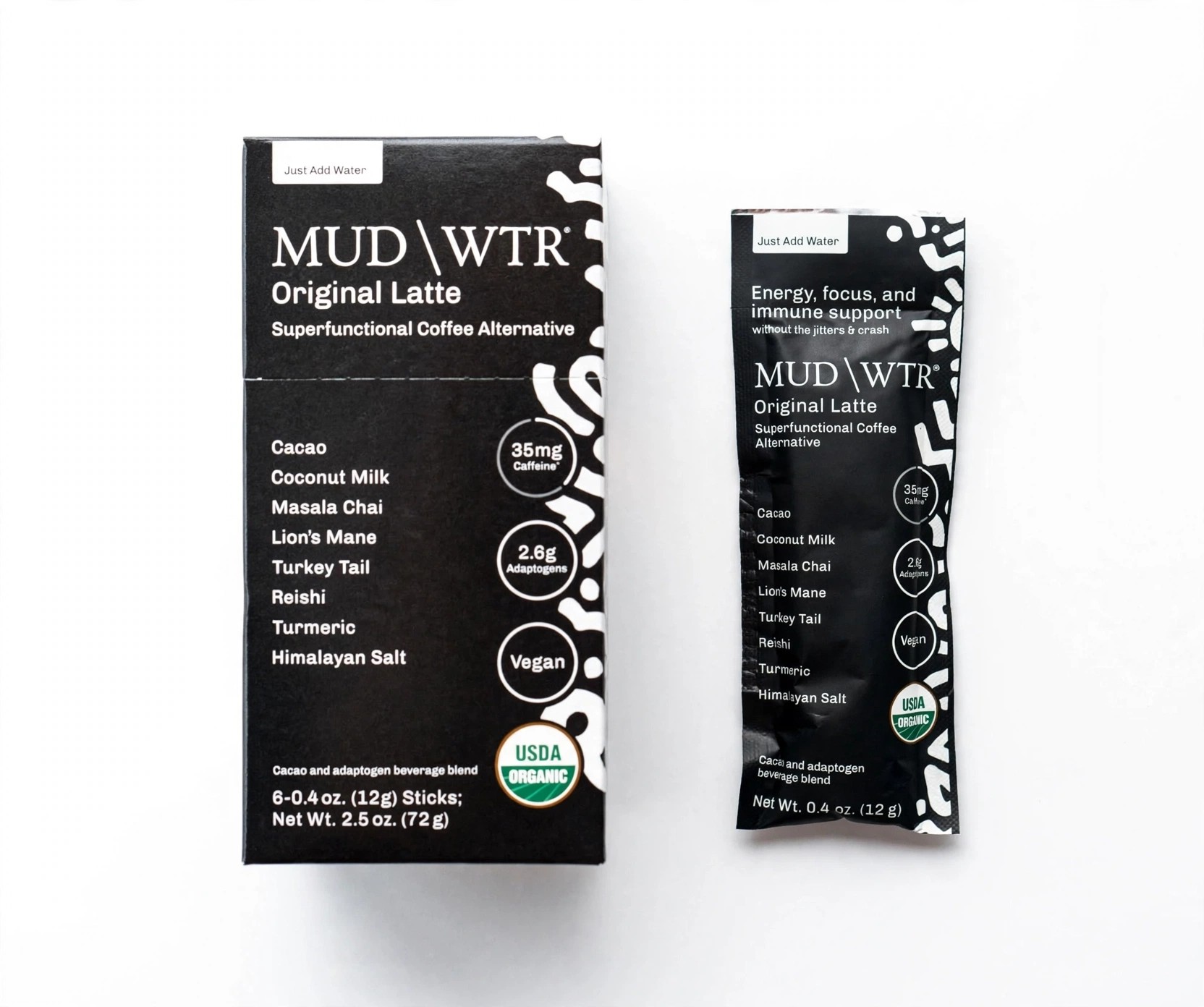
Retail changes the job. By 2023 our rise Cacao and rise Matcha were available in more than 500 Target stores nationwide, we opened our first cafe MUDWTR gather in Santa Monica, California, and we expanded internationally into Canada and the UK. A tin on a shelf and a cup served across the counter have to match, or trust slips.
In September 2018 we received a 25,000 dollar first investment from Paul DeJoe and I quit my day job to work full time. That allowed steadier production and better records. Consistency means the same growers, the same specifications, the same fill weight and the same third party tests by lot and batch, then handling that survives trucks, shelves and a busy bar. You cannot try to be liked by everyone or you will be loved by no one. We kept the flavor earthy and the branding direct, and put the work into repeatability instead of smoothing out the product.
You often say fix your fix and started from the mud now we here. For a household that keeps a small shelf for years, what is worth paying for here, and what step in the chain is still opaque and needs better proof?
Fix Your Fix is how we talk about caffeine. I have the CYP1A2 variant, which means I metabolize caffeine more slowly and am more impacted by it. That is my biology, not a claim about yours. Would I rather induce alertness without dependency than chase high caffeine peaks. Would I rather protect sleep and recovery than glorify hustle and overwork. Would I rather question caffeine culture than follow but first, coffee norms. Started from the mud now we here is just an honest line about beginning in debt and building tin by tin.
What is worth paying for is what you can verify. Organic farming records, California mushroom origin, US blending and packing, and lot tied lab results. What is still opaque across much of the industry is the middle step. Exact farms by lot, fruiting body share, extraction solvents and ratios, and full heavy metals panels are rarely printed on pack. What it would take is simple. Name the growers, publish the method, and show the certificate. We credit what is traceable and we name what is not yet.
Closing note from the desk
What stays after this conversation is a founder who kept the ritual and changed the supply behind it. Heath still talks like a designer who loves coffee, yet he answers like a buyer of raw materials, asking for grower names, lot codes and lab sheets before adjectives.
MUDWTR set out to help people rethink their relationship with coffee, without jitters, crash and wrecked sleep, and to build that change from certified fields and California mushroom houses through US blending rooms to a readable label. The work ahead is the same as the work so far, to show each step and say plainly where proof is still thin.
Product spotlight
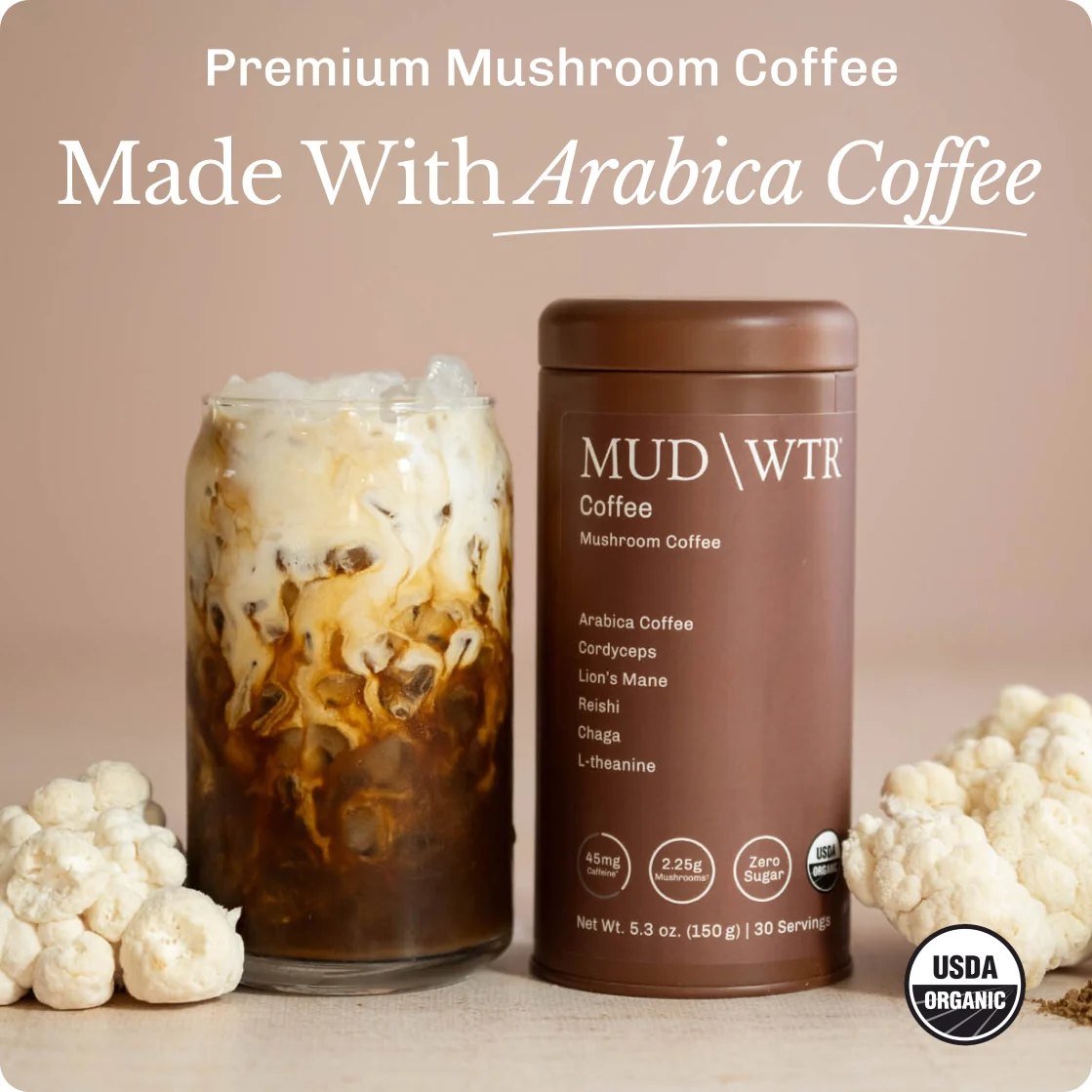
Coffee is a 30 serving tin priced at 50 dollars. It blends arabica coffee with cacao, masala chai and mushrooms including lion’s mane and cordyceps, plus L theanine. Mix with hot water and milk or creamer as a morning coffee replacement.
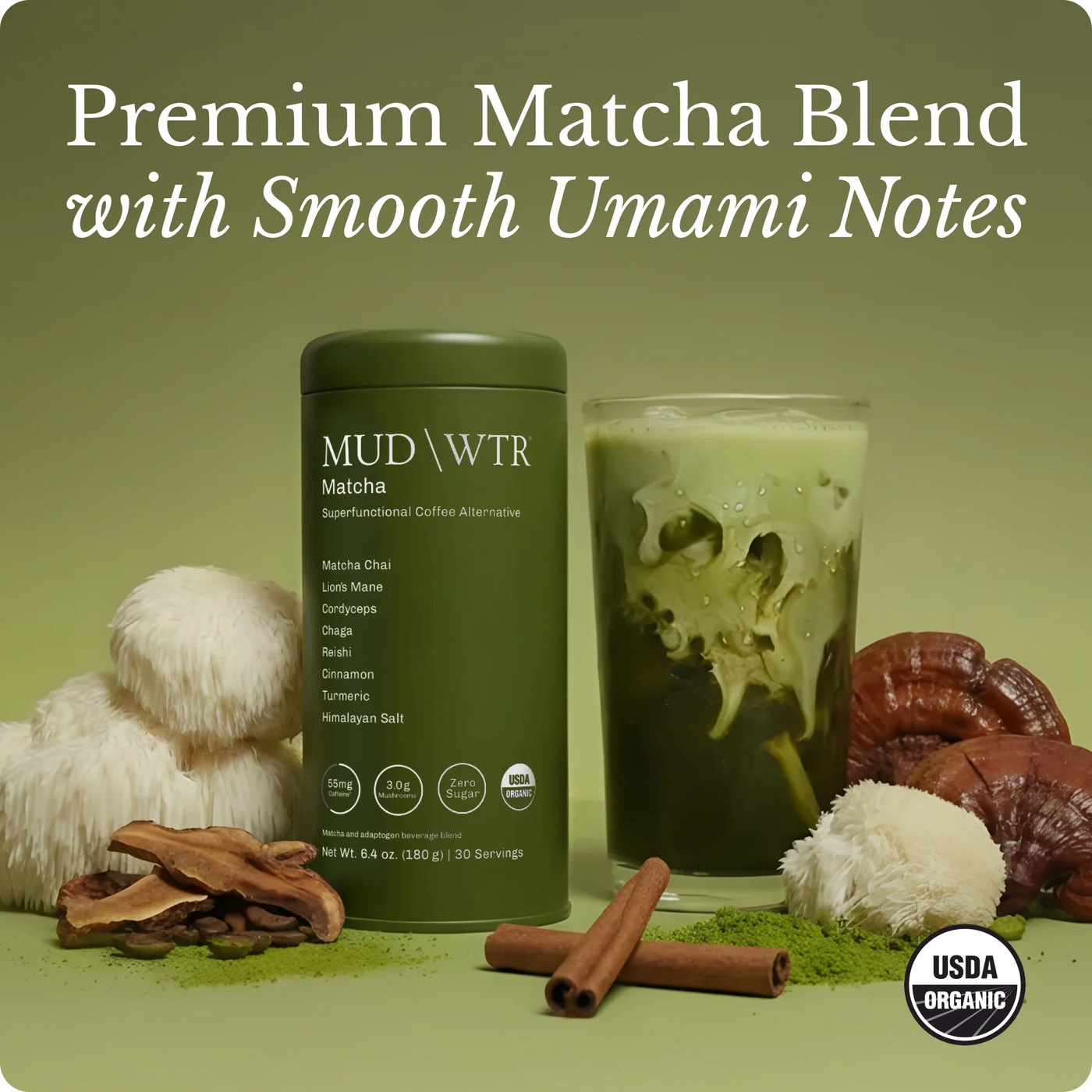
Matcha is a 30 serving pouch priced at 50 dollars. It is 100 percent organic matcha with spices and mushrooms and naturally occurring L theanine, with a fraction of coffee caffeine. Mix with hot water or milk as a morning rise blend.

Kristen Decker
Kristen produces the interviews at Seed to Capsule: the research, the supplier maps, the follow-up calls. She asks for the name of the farm early in every conversation, and writes it down before the founder can change the subject.
More from Kristen Decker →